
Why the Vancouver, WA Housing Market Is Different from Portland's in 2026
Same metro, one river, two very different markets. Here’s how home prices, inventory, taxes, home types, and the I-5 bridge compare between Vancouver, WA and Portland, OR, using real 2026 data.

“Isn’t Vancouver basically just a suburb of Portland?” I hear this all the time, usually from buyers relocating from out of state. And I get it. The two cities sit right across the Columbia River from each other, share the same airport, and show up as one metro area in most national reports.
But as someone licensed in both Washington and Oregon, I can tell you the two housing markets don’t move in lockstep. In 2026, they’re actually heading in slightly different directions. The tax rules are different, the homes are different, and the people buying them often have different goals.
Here’s an honest, data-backed look at what makes the Vancouver, WA housing market different from Portland’s right now, and what it means for you whether you’re buying, selling, or deciding which side of the river to call home.
Vancouver, WA vs. Portland, OR Housing Market Compared (2026)
Market data as of September 2026. Sources noted throughout the post.

| Factor | Vancouver, WA | Portland, OR |
|---|---|---|
| City median sale price (Redfin, 3 months ending Sept 2026) | About $491K, 📈 up 2.4% YoY | About $518K, 📉 down 2.2% YoY |
| Regional median (RMLS, Sept 2026) | Clark County: $549,500, 📈 up 0.8% YoY | Portland Metro: about $540K (Aug 2026) |
| Months of inventory (RMLS, Sept 2026) | Clark County: 4.3 months | Portland Metro: 4.2 months |
| State income tax | None for most residents; a 9.9% tax on income above $1 million is scheduled for 2028 (repeal vote and lawsuit pending) | 4.75% to 9.9%, plus local taxes up to about 4% more for higher earners |
| Sales tax | 8.9% in Vancouver | None |
| Tax when you sell | Seller pays excise tax (REET), starting at 1.1% state plus 0.5% local | No transfer tax in Multnomah County |
| Effective property tax rate (county median) | Clark County: about 0.82% | Multnomah County: about 1.02% |
| Typical housing stock | More single-family homes, new construction, and larger lots | More older and historic homes, condos, and smaller urban lots |
The 2026 Numbers: Vancouver Is Rising While Portland Cools
Here’s the headline most people miss. According to Redfin, over the three months ending September 2026, Vancouver home prices were 📈 up 2.4% from a year earlier, with a median sale price of about $491,000. Over the same stretch, Portland home prices were 📉 down 2.2%, with a median of about $518,000.
So Portland is still a little more expensive at the city level, but the gap is narrowing, and the momentum is on the Washington side.
Zoom out to the county and metro level, and the picture shifts again. RMLS reported that Clark County’s September 2026 median sale price was $549,500, up 0.8% year over year, with 4.3 months of inventory and an average of 70 days on the market. The Portland Metro area sat at 4.2 months of inventory with an average of 68 days on market, and its August median was $540,000.
Portland has also seen more price cuts. Realtor.com reported that in April 2026, the Portland-area median list price was down 5.7% year over year, and nearly one in four active listings had a price reduction, compared with about 16.7% nationally.
What it means: Neither market is crashing (I tackle that question head-on in is the Vancouver housing market crashing?). Both are more balanced than the frenzy of 2021 and 2022, with more homes to choose from and more time to decide. But Vancouver is holding value a bit better, while Portland buyers are finding more room to negotiate. For more on what rising supply means, see Clark County inventory is rising faster than demand and why more inventory matters more than a rate drop.
Why the Two Markets Behave Differently
Taxes shape who’s buying
Washington doesn’t tax wages for the vast majority of residents, while Oregon has one of the highest income taxes in the country. That single difference draws a steady stream of buyers to Clark County, especially remote workers, retirees living on investment income, and people who work in Washington. Many of my clients moving from Portland tell me taxes were the tipping point, though the full Portland vs. Vancouver cost comparison includes more than taxes. (More on the details, and the catch, below.)
Land and new construction
Clark County still has room to grow, and builders are actively developing new subdivisions in areas like Ridgefield, Battle Ground, Camas, and east Vancouver. Portland is largely built out within its urban growth boundary (I dig into growth limits in is urban growth destroying Washington?), so most new housing there is infill: townhomes, ADUs, and apartments on existing lots. If you want a brand-new single-family home with a builder warranty, you’ll generally find more options on the Washington side. Browse new construction homes for sale in Vancouver, WA, compare new construction vs. resale, or see the best new construction neighborhoods for 2026. Ridgefield is a big part of this story, too: here’s why it’s Vancouver’s fastest-growing suburb.
Home types and lot sizes
Portland’s charm is in its established neighborhoods, with Craftsman bungalows, mid-century homes, and older houses on smaller city lots, plus a much larger condo market. Vancouver leans more suburban (though it has affordable condos too), with more single-family homes, attached garages, newer floor plans, and bigger yards. Neither is better. They just fit different lifestyles.
The Tax Difference, Explained Honestly
Taxes are the biggest reason buyers compare these two markets. But “no income tax” doesn’t mean “no taxes,” so here’s the full picture.
No state income tax in Washington (for almost everyone)
Washington doesn’t tax wages for most people. Oregon’s income tax runs from 4.75% up to 9.9%, and Portland-area residents can owe two more local income taxes for higher earners: Metro’s Supportive Housing Services tax (1% on taxable income above $128,000 single in 2026) and Multnomah County’s Preschool for All tax (1.5% above $125,000 single, and 3% above $250,000). Put together, a high earner living in Portland can face a top marginal state and local rate of about 13.9%. Portland also charges a flat arts tax. Get the official details from the Oregon Department of Revenue, and see my full breakdown of Washington vs. Oregon taxes in 2026.
Washington’s new “millionaires tax”
There’s one big 2026 update. In March 2026, Washington enacted a 9.9% tax on household income above $1 million (Senate Bill 6346). It’s scheduled to apply starting with the 2028 tax year, with the first returns due in 2029, and it doesn’t touch income below $1 million. Its future is uncertain: Initiative 645 on the November 3, 2026 ballot would repeal it, and a lawsuit challenging it under the state constitution is still pending. For the vast majority of buyers, Washington still has no income tax. I explain the details in what SB 6346 means for Vancouver, WA residents and 2026 tax changes in Washington.
The Portland commuter catch
Here’s the part a lot of articles skip. If you live in Vancouver but work in Oregon, you’ll still owe Oregon income tax on the wages you earn in Oregon, as a nonresident. If your income is above the thresholds, you may also owe Metro’s SHS tax, and possibly Multnomah County’s PFA tax, on that Oregon-source income. The biggest income tax savings go to people who work in Washington, work remotely for a company where Oregon doesn’t apply, or live on retirement income. Talk to a CPA before you count on the savings, and read my deep dive: Does Oregon tax you if you live in Vancouver, WA?
Washington’s trade-offs: sales tax and excise tax
Washington makes up for the missing income tax in other ways. The combined sales tax in Vancouver is 8.9%, while Oregon has no sales tax at all (which is why so many Vancouver residents do their big shopping in Oregon). For the everyday budget picture, see my 2026 cost of living in Vancouver, WA and the hidden costs of living in Vancouver.
Washington sellers also pay a Real Estate Excise Tax (REET) when they sell. The state portion is graduated, starting at 1.1% on the first $525,000 of the sale price and 1.78% on the portion up to $1.525 million, plus a local rate of 0.5% in Vancouver. You can see current local rates from the Washington State Department of Revenue. On a $550,000 home, that works out to roughly $9,000. Oregon generally prohibits real estate transfer taxes, so Portland sellers don’t pay one.
Property taxes on both sides of the river
Clark County’s effective property tax rate runs about 0.82%, compared with about 1.02% in Multnomah County, based on median tax bills compared with home values. But Oregon’s system is unusual. Under Measures 5 and 50, Oregon taxes are based on an “assessed value” whose growth is generally capped at 3% a year, so two similar homes on the same street can have very different tax bills. Washington assesses homes at market value (here’s what to know about property taxes in Vancouver, WA). On either side, always look up the actual tax bill for the specific home you’re considering, using the Multnomah County or Clark County sites.
Price Points Matter: Where Each Market Is Hot
“Is it a buyer’s market or a seller’s market?” The honest answer in 2026 is: it depends on your price range.
In Clark County’s July 2026 RMLS data, homes priced between about $425,000 and $475,000 had only 2.7 to 2.8 months of inventory, which is still competitive for buyers. Between $475,000 and $600,000, inventory rose to about 4 months. At $1 million to $1.5 million it was 4.6 months, and above $2 million it reached 7.4 months, which gives luxury buyers real negotiating power.
- First-time and entry-level buyers: Well-priced homes in the $400s can still draw multiple offers on the Washington side. Get fully pre-approved and be ready to move. Run your numbers with my Vancouver or Portland home affordability calculator.
- Move-up and luxury buyers: You have more choices and more leverage, especially on homes that have been on the market for a few weeks. Here’s how I approach making an offer and negotiating.
- Sellers: Pricing right from day one matters more than it has in years. Homes that start too high tend to sit, especially in Portland, where price cuts are common. See pricing your Vancouver home.
Want current numbers for your neighborhood? Check my Vancouver Market Snapshot and Portland Market Snapshot.
The I-5 Bridge Factor in 2026
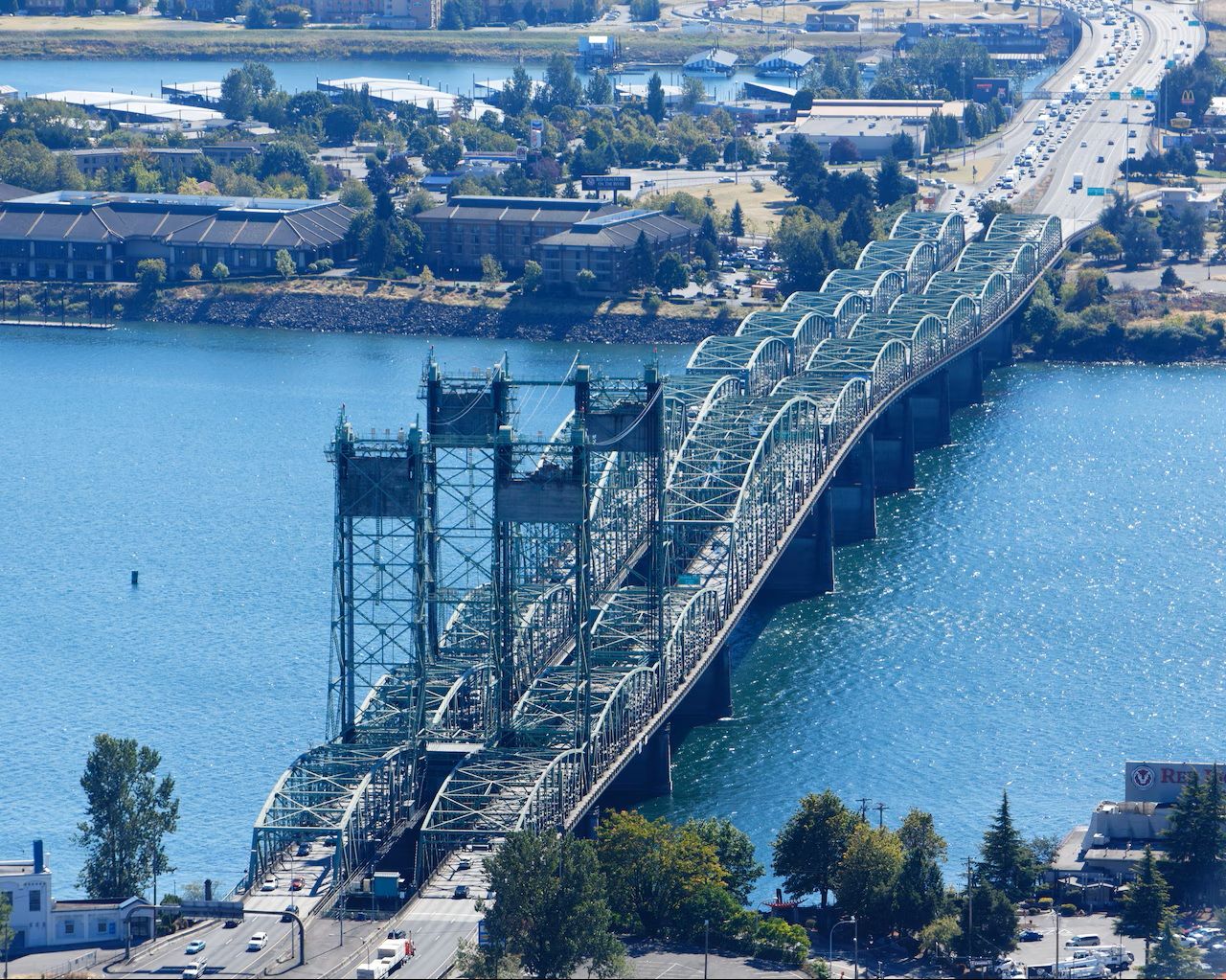
If you’ll commute between Vancouver and Portland, the bridge belongs in your home search. More than 140,000 vehicles cross the century-old Interstate Bridge every day. (I’ve written about Clark County’s I-5 bridge crisis before.)
In July 2026, the Interstate Bridge Replacement Program cleared its federal environmental review. Project leaders plan to select a contractor in 2027 and begin construction in 2028, with the first phase expected to open to drivers around 2034. Tolling on the I-5 bridges is also expected to start around 2028. Final toll rates haven’t been set, but the scenarios under study have ranged from about $1.55 to $4.70 per crossing, depending on the time of day.
- Commute math: If you’ll cross the river daily, factor future tolls into your monthly budget alongside the tax savings.
- The I-205 alternative: The Glenn Jackson Bridge on I-205 is not part of the tolling plan, which may make east Vancouver and Camas more attractive to some commuters. Compare east vs. west Vancouver and read moving to Camas, WA.
- Construction years: Expect years of construction impacts near the I-5 corridor in downtown Vancouver and north Portland.
Who Each Market Fits Best
Vancouver, WA may fit if…
- You work remotely, work in Washington, or live on retirement income, so the no-income-tax benefit really applies to you.
- You want newer construction, a bigger yard, an attached garage, or room for an RV or shop.
- You want a quieter, more suburban pace with Portland still close by. My guides to retiring in Vancouver, WA and relocating to Vancouver for retirement cover this in more detail.
- You want walkable urban living without Oregon’s income tax. See Downtown Vancouver, WA living.
Portland, OR may fit if…
- You work in Oregon and would owe Oregon income tax anyway, and you’d rather skip the bridge commute.
- You love older-home character, established tree-lined neighborhoods, and urban walkability.
- You want strong public transit and a big-city restaurant, arts, and culture scene right outside your door.
- You’re looking for a condo, since Portland has a much larger condo market.
- You want to explore first: see my moving to Portland guide and Portland neighborhood guide.
Still weighing it? Read my honest takes on the pros and cons of moving to Vancouver, WA and the pros and cons of living in Portland, Oregon, or my side-by-side guide to living in Vancouver vs. Portland.
What This Means for Buyers and Sellers Right Now
- Buyers: With roughly four months of inventory on both sides of the river, you have more choices and more time than you did a few years ago. Ask about seller concessions, builder rate buydowns on new construction, and inspection repairs, especially on homes that have sat for 30 days or more.
- Sellers in Vancouver: Prices are holding steady, but buyers are comparing carefully. Price to the current market, budget for your excise tax, and make sure your home shows well. Start with a free home valuation and my guide to selling your Vancouver home.
- Moving from Portland to Vancouver: Run the full math before you list: income tax savings, sales tax, excise tax on a future sale, property taxes, and your commute (including future tolls). My SW Washington relocation guide walks you through it.
- Families: School districts vary widely within Clark County. See my guide to the best school districts in Clark County.
More Guides for Comparing Vancouver and Portland
Vancouver, WA vs. Portland Housing Market: Common Questions
Is Vancouver, WA cheaper than Portland in 2026?
Is it better to live in Vancouver, WA or Portland, OR?
Do I pay Oregon income tax if I live in Vancouver and work in Portland?
Does Washington have an income tax in 2026?
Does Washington have a sales tax or property tax?
Is the Vancouver housing market a buyer’s or seller’s market?
When will I-5 bridge tolls start?
Why are so many people moving from Portland to Vancouver?
Are home prices dropping in Portland?
Not Sure Which Side of the River Fits You? 🌉
I’m licensed in both Washington and Oregon, and I’ll help you compare homes, taxes, and commutes on both sides of the Columbia so you can make a confident move.
Book a Free Discovery Session Moving to Vancouver Guide Join My Newsletter
Categories
Recent Posts








GET MORE INFORMATION

Cassandra Marks
Realtor, Licensed in OR & WA License ID: 201225764
Realtor, Licensed in OR & WA License ID: 201225764