A comprehensive guide to history, cost of living, neighborhoods, things to do, and everything else you need to know before you make the move.
⚡ Quick Answer
Vancouver, Washington is a city of 198,000+ people on the Columbia River, just across from Portland, OR. It has no state income tax for the vast majority of residents, a median home price around $540,000, a median household income of $78,430, and a mild, wet Pacific Northwest climate. It's a popular relocation choice for families, remote workers, and retirees drawn to the tax savings, outdoor access, and lower cost of living than Portland.
Moving to a new city is an exciting journey filled with opportunities, exploration, and a fresh start. If you're considering moving to Vancouver, Washington, you're in for a treat. Nestled along the north bank of the Columbia River, Vancouver offers a perfect blend of history, nature, and modern amenities. Here's everything you need to know about this charming Pacific Northwest city.
198K+
Population
$0*
State income tax*
$540K
Median home price
39
Median age
*For household income under $1 million/year. A new 9.9% state income tax on income above that threshold takes effect in 2028.
History of Vancouver, Washington
Fort Vancouver — Photographs in the Carol M. Highsmith Archive
Vancouver, Washington, boasts a rich history dating back to 1825 when it was established by the Hudson's Bay Company as Fort Vancouver. This fur trading post became a vital hub for commerce and administration in the Pacific Northwest. By 1849, the U.S. Army had recognized its strategic importance, establishing a military post that played a pivotal role during the Indian Wars.
Incorporated in 1857, Vancouver's growth surged with the advent of the railroad in the 1880s, which connected it to national markets. The city experienced another economic boom during World War II when the Kaiser Shipyards brought jobs and a surge in population.
Today, Vancouver stands as a vibrant city that honors its storied past while embracing modern development. Historic landmarks like the reconstructed Fort Vancouver and Officers Row remind visitors and residents alike of the city's rich heritage. Paired with its thriving waterfront and growing cultural scene, Vancouver offers a unique blend of history and progress.
Demographics & Economy in Vancouver, WA
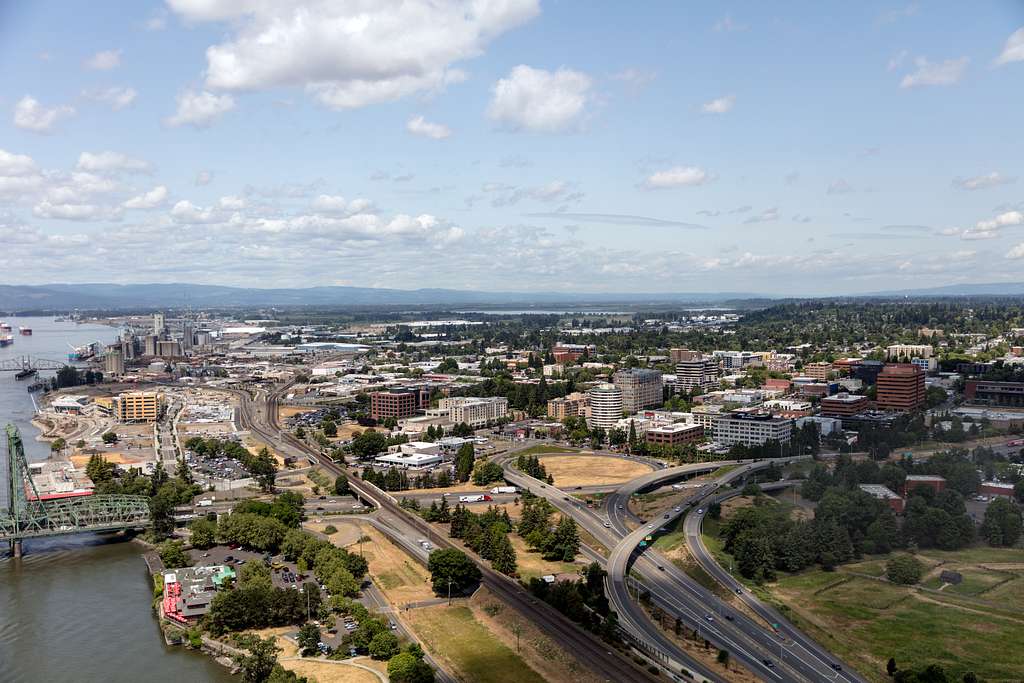
Aerial view of Vancouver, Washington — Photographs in the Carol M. Highsmith Archive
Vancouver, WA, offers a thriving community with a strong economy, excellent schools, and a high quality of life. Here's what the numbers look like:
Population: Over 198,000 residents call Vancouver home.
Number of Schools: Served by top-rated schools in the Vancouver Public Schools and Evergreen Public Schools districts, with 41 schools in total.
Median Household Income: Around $78,430, offering an affordable lifestyle compared to nearby Portland.
Median Age: 39 years, indicating a balanced mix of young professionals, families, and retirees.
Median Home Price: Approximately $540,000, with options ranging from historic homes to modern builds. If you're leaning toward building new rather than buying resale, I break down that whole path separately in my new construction guide.
Unemployment Rate: 4.68%, below the national average, thanks to a diverse economy that includes healthcare, manufacturing, and tech industries.
Cost of Living in Vancouver, WA
Aerial view of houses in Vancouver, WA — Photographs in the Carol M. Highsmith Archive
Vancouver has a slightly higher cost of living than the national average, but it remains meaningfully more affordable than Portland, Oregon.
Income Taxes: No state income tax in Washington for the vast majority of residents, a major draw for professionals and retirees alike. A new 9.9% tax applies only to household income above $1 million per year, starting in 2028.
Property Taxes: Competitive rates, averaging around 1.01%.
Sales Tax: 8.5%, slightly higher than the national average.
Real Estate Excise Taxes: A tiered system based on property value, ranging from 1.1% to 3%.
Climate & Weather in Vancouver, WA
Vancouver enjoys a temperate maritime climate: mild, wet winters and warm, dry summers. Average temperatures range from 40°F in January to 80°F in July. The city's moderate rainfall supports lush greenery, making it a haven for nature lovers.
Average Temperature: Spring ranges from the mid-40s to mid-60s°F, summers are warm (upper 50s to mid-80s°F), fall cools from the mid-70s to mid-40s°F, and winters are mild (mid-30s to upper 40s°F) with occasional frost or light snow.
Precipitation: Rain is moderate year-round, with the wettest months (November–March) seeing 4–6 inches per month. Spring and fall get 2–4 inches, while summer is the driest, often under 1 inch. Some summers bring droughts from June to October, leading to burn bans and firework restrictions.
Extreme Weather: Usually mild, but winter storms can cause flooding, ice, or snow, and the city is less equipped for major snowfall. Windstorms are rare but may cause power outages. Heatwaves can push summer temps into the 90s°F, with occasional hail, tornadoes, and wildfires possible.
Seasonal Changes: All four seasons are distinct — spring brings flowers and longer days, summer is warm and outdoor-friendly, fall shows vibrant foliage, and winter is the wettest season with occasional frost or snow.
Outdoor Recreational Activities in Vancouver, WA
Outdoor enthusiasts will find endless opportunities for adventure in and around Vancouver.
Camping: Scenic campgrounds like Battle Ground Lake or the Gifford Pinchot National Forest.
Hitting the Coast: A short drive west takes you to the Long Beach Peninsula or the Oregon Coast for beachcombing, mushroom picking, and whale watching.
Skiing and Snowboarding: Mount Hood is just over an hour away.
Fishing: The Columbia River is a haven for anglers seeking salmon, steelhead, and sturgeon.
Hiking Trails: Beacon Rock, Silver Star Mountain, or Lacamas Lake.
Kayaking and Paddleboarding: Calm waters along the Columbia River or nearby lakes.
Road and Mountain Biking: Burnt Bridge Creek Trail and Washougal MX Park.
Local Attractions in Vancouver, WA
Vancouver Waterfront Park — by cityofvancouver.us
From historic landmarks to scenic waterfront views, Vancouver offers a little something for everyone.
The Vancouver Waterfront: A bustling area with restaurants, shops, and scenic river views.
Fort Vancouver National Historic Site: Fort Vancouver, Pearson Field Museum, Officers Row, Cedar Creek Grist Mill, and the Chelatchie Prairie Railroad, dating back to the Lewis & Clark expedition in 1806.
Pearson Field and Air Museum: Celebrates Vancouver's aviation history.
Arts & Entertainment: Public art on First Fridays, festivals at Esther Short Park, indie films at Kiggins Theatre, live concerts at RV Inn Style Resorts Amphitheater.
Shopping: Big-name stores at Vancouver Mall, boutiques in Camas, antique shops in Battle Ground, and local farmers markets.
Sporting Events: No pro teams, but local leagues like Ridgefield Raptors baseball, Vancouver Volcanoes basketball, Vancouver Victory FC, and PNW Cavaliers football.
Portland Proximity: Portland's big-city attractions are just a short drive away for even more entertainment, dining, and shopping.
Nearby Parks in Vancouver, WA
It wouldn't be the lush, green Pacific Northwest without the parks. Here are some favorites — or check out this map for more.
If you're looking for more adventures and local insight, sign up for my monthly newsletter, where I send out all the cool things to do in and around Vancouver.
Our Favorite Local Spots in Vancouver, WA
Vancouver is home to a variety of fantastic local businesses, from cozy cafés to vibrant breweries and must-visit restaurants.
Tillamook, OR: Home of Tillamook Creamery, coastal scenery, crabbing and surfing.
Bend, OR: 300+ days of sunshine — hiking, biking, kayaking, brewery hopping.
Timberline Lodge – Government Camp, OR: On the slopes of Mt. Hood, over 85 years of mountain experiences.
Getting Around Vancouver, WA
One of the best things about living in Vancouver is how easy it is to get around, whether you prefer driving, public transit, or biking.
Car Travel: Well-maintained roads and highways, quick access to I-5 and I-205.
Public Transit: C-TRAN buses run throughout Vancouver and into Portland, including express routes.
Rideshare & Taxis: Uber, Lyft, and taxi services for on-demand rides.
Biking: A growing network of bike lanes and trails.
Why Choose Vancouver, WA?
With its rich history, welcoming community, and endless opportunities for recreation and relaxation, Vancouver is more than a city, it's a lifestyle. Whether you're drawn to its scenic beauty, tax advantages, or vibrant culture, Vancouver, Washington offers something for everyone.
Ready to make your move? Reach out today to start your journey to this Pacific Northwest gem.
Frequently Asked Questions
Is Vancouver, Washington a good place to live?
Yes, Vancouver is often praised for its access to nature, no state income tax for the vast majority of residents, family-friendly neighborhoods, and proximity to Portland. It offers a balanced mix of urban and suburban life, with a strong sense of community and a slower pace than big cities.
Is moving to Vancouver worth it?
For many, yes, thanks to the affordability compared to Portland, tax benefits, and quality of life. It's particularly attractive to remote workers, families, and retirees, with great access to hiking, rivers, and the Oregon Coast.
Why are so many people moving to Vancouver, Washington?
Lower taxes, access to outdoor recreation, quality schools, and relative affordability. It's a popular alternative to Portland with many of the same amenities but fewer urban issues, and Washington's lack of a broad state income tax appeals to transplants from higher-tax states.
What are winters like in Vancouver, Washington?
Mild, rainy, and cloudy, with average highs in the 40s and 50s. Snow is rare but possible a few times each season. Most winter weather is drizzle, fog, and overcast skies, with freezing temperatures uncommon.
What is a good salary in Vancouver, WA?
Generally $75,000 to $90,000 for a single person, and $100,000 or more for a family, depending on lifestyle. This allows for comfortable housing, transportation, and some discretionary spending.
Does Vancouver, WA have a homeless problem?
Like many Pacific Northwest cities, Vancouver has a growing homeless population, and city/county efforts are ongoing to provide housing and support services. The issue is more visible near downtown and transit corridors.
What are the disadvantages of living in Vancouver?
Frequent rain and overcast skies, traffic congestion near I-5 and I-205, and rising housing costs. Limited public transit and occasional urban sprawl are also noted, and job opportunities can be more concentrated in Portland.
Is $60,000 enough to live in Vancouver?
It may be manageable for a single person with modest expenses, but could be tight for a family. Rising rents and home prices can make a comfortable lifestyle challenging at this income level, so careful budgeting matters.
Is $100,000 enough to live in Vancouver?
Yes, $100,000 is typically considered a solid income in Vancouver, allowing for home ownership (or comfortable renting), savings, and lifestyle flexibility.
Why are people leaving Vancouver?
Some residents leave due to rising housing costs, traffic, and concerns about growth and infrastructure, or in search of a lower cost of living elsewhere. Net migration remains positive overall, meaning more people are moving in than out.
Whether you're wondering about housing costs, commute times, or the best neighborhoods, I'd love to help you figure out if this is the right move for you.