
What's Required in a New Washington Home?
What's Already Required in a Washington New Build, and What Counts as an Upgrade?
"Energy efficient" and "EV ready" look great on a brochure. In Washington, a lot of it is the baseline, and knowing the difference protects your wallet.
What's already required in a new Washington home? The 2021 Washington State Energy Code (effective March 15, 2024) sets baseline insulation and window minimums, and it lets builders choose energy credits to meet the rest. Separately, the state residential code requires a 40-amp EV charging circuit for each new dwelling unit. What's not required: the charger itself, solar panels, and smart-home devices. And you may have heard Washington requires heat pumps in every new home. That was the plan, but the current code works through a credit menu instead, so ask which choices your builder made.
I'll be honest about how this page started. I set out to write about smart home features, and in the research I found something more useful: what many builders call upgrades or selling points are, in Washington, code. And one thing I'd read in several places, that heat pumps are mandatory in every new home, turned out to be out of date. I'd rather tell you that than repeat it.
This covers what the state actually requires, how the energy code's credit system works, what the EV rule says, and what that means when a builder's model home brochure says "energy efficient" or "EV ready." If you haven't toured yet, add these questions to what to ask on your first builder model home tour.
Which Energy Code Applies to a New Home in Vancouver Right Now?
The 2021 edition, effective March 15, 2024

The State Building Code Council's energy code page lists the 2021 Washington State Energy Code as effective March 15, 2024. "Residential" under that code includes detached one- and two-family homes and townhouses. The WSU Energy Program's compliance worksheet for single-family homes says the same, that the requirements apply to detached homes and townhouses.
The effective date was originally July 1, 2023. A rule filing by the Council, WSR 24-03-084, moved it to March 15, 2024 and modified the energy codes to address legal uncertainty after a federal court decision, California Restaurant Association v. City of Berkeley. That's the reason the heat pump story below changed.
A newer 2024 edition is on the way. WSU's Energy Program reports its effective date will be May 3, 2027, with adoption steps still in progress, so what counts as standard may change for homes permitted after that.
Examples of baseline minimums already in the code
Those come from the prescriptive path in WSU's single-family compliance worksheet, which WSU describes as the typical compliance approach. Builders can comply other ways, but the point stands: insulation and window quality at this level isn't an upgrade, it's the starting line.
Is a Heat Pump Required in Every New Washington Home?
Not as a flat rule anymore, but the code strongly nudges toward one
When the 2021 code was first adopted, it was widely reported that heat pumps would be required for space and water heating in new homes. That's what I'd read too. But the version in force since March 15, 2024 works differently. Under the WSU worksheet, each home must earn a minimum number of energy credits, and the builder picks the combination.
The credit for the primary heating source shows why heat pumps are common without being mandatory. Per the worksheet, a heat pump system earns 3.0 credits, a heat pump with supplemental heating earns 1.5, electric resistance with a ductless mini-split heat pump in the largest zone earns 2.0, electric resistance alone earns 0.5, and minimum-efficiency combustion heating earns 0. A builder using gas heating isn't barred, it just has to earn the full credit total from other measures. Other credit options include a more efficient envelope, air sealing and ventilation, efficient water heating, solar, and an appliance package.
I'm not taking a side on heating fuels here, there's plenty of debate elsewhere. What matters for you is that "energy efficient" in a brochure doesn't tell you what's in your home. The permit drawings are required to identify which credit options the builder selected and their point values, so that's the document to ask about.
What Does Washington Require for EV Charging in a New Home?
A circuit, not a charger
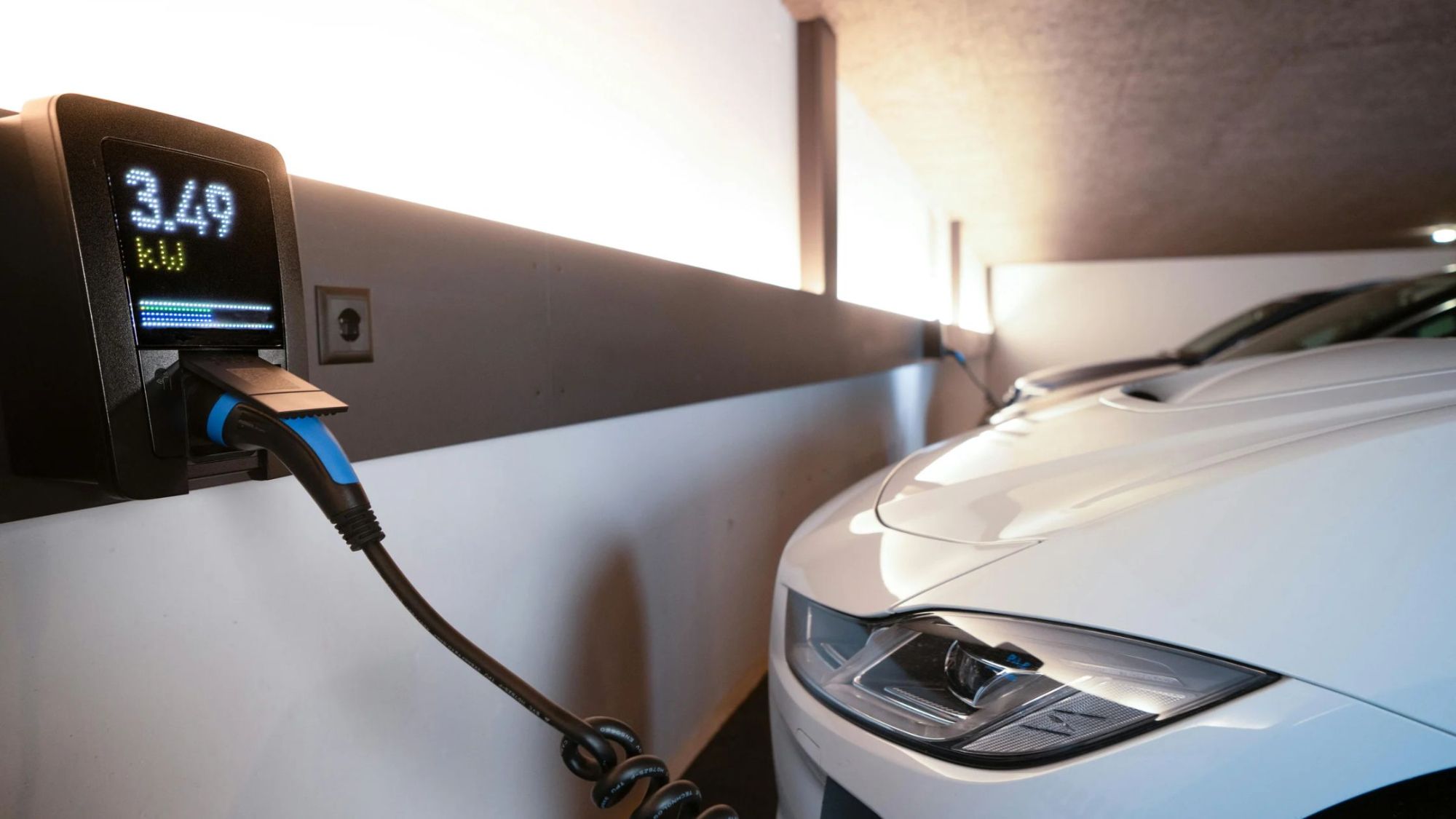
The Washington State Residential Code, adopted in chapter 51-51 WAC, includes Section R309.6.2. It says a minimum of one 40-ampere dedicated 208/240-volt branch circuit must be installed in the electrical panel for each dwelling unit, and that the circuit must end at a junction box, a receptacle outlet, or EV charging equipment. The State Building Code Council's code language includes exceptions, for example where there's no public utility or commercial power supply, so check how it applies to a specific home.
What that does and doesn't mean for you:
So when a builder lists "EV-ready" as a feature, it's accurate, and it's also what the state requires of every new home. It isn't a premium feature you should pay extra for.
What's Not Required, So It's a Real Upgrade or a Real Negotiation?
Where the code stops
These are exactly the items that show up on a design center selection sheet. I walk through how to prioritize and track them in Design Center 101, and every one of them should be written into the builder's purchase agreement, not described in a flyer.
How Do You Find Out What's Actually in Your Home?
Seven questions, answered in writing
Timing matters here. Insulation, air sealing, and the EV conduit are all hidden once drywall goes up, which is why the pre-drywall walkthrough is your one chance to see them. And since a new home's code-built efficiency is part of what you're paying for, it belongs in the comparison covered in new construction versus resale in Vancouver, WA. Having your own inspector review the home is worth it either way, as covered in is an inspection necessary on new construction.
Frequently Asked Questions
Washington energy code and EV requirements, common questions
What energy code applies to new homes in Washington?
Are heat pumps required in new homes in Washington?
Does Washington require new homes to be EV-ready?
Is an EV charger included in a new construction home?
How can I see which energy credits my builder chose?
Do these requirements apply to townhomes?
Comparing Builder Packages and Not Sure What's Real?
Send me a builder's feature list and I'll help you sort code baseline from true upgrades, before you pay for either.
Book Your Free Discovery Session Run the Affordability Calculator Join Our Facebook GroupCategories
Recent Posts






GET MORE INFORMATION

Cassandra Marks
Realtor, Licensed in OR & WA License ID: 201225764
Realtor, Licensed in OR & WA License ID: 201225764