
Why Retirees Are Moving to Vancouver WA from California & Arizona
Why Retirees Are Moving to Vancouver WA from California and Arizona
No state income tax. Summers that rival California. Outdoor trails in every direction. And none of Arizona's 110°F heat. Here's the honest case for retiring in Vancouver WA — from a Clark County REALTOR® who lives it.
I get calls, texts, and emails every single day from people thinking about making the move from California or Arizona to Vancouver WA. And the questions are always variations of the same thing: Is it really as affordable as they say? Does the weather actually work for an active retirement? Can I really save that much on taxes?
The honest answer to all three is yes — with nuance. I'm Cassandra Marks, a Clark County REALTOR®, a farmer, and a transplant myself. I moved here from Minnesota, so I know what it means to leave somewhere familiar and figure out a new place. I've helped hundreds of California transplants find their home in Vancouver, Camas, Ridgefield, and across Clark County. This is what I tell them — and it's also what I share regularly in my Facebook community for Vancouver-area neighbors, where a lot of recent transplants swap notes on exactly this transition.
If you're considering retiring in Vancouver Washington, this guide covers everything: the real tax math, the actual cost of living comparison, the outdoor lifestyle you came here for, the climate trade-offs to understand honestly, and which neighborhoods fit different retirement profiles. Let's go.
How Much Do Retirees Actually Save on Taxes Moving from California to Vancouver WA?
Washington state has zero state income tax. That single fact is the financial engine behind the migration from California to Clark County — and it applies to every form of retirement income. Social Security. Pension checks. IRA withdrawals. 401(k) distributions. Rental income. Washington taxes none of it at the state level.
California, by contrast, has the highest state income tax in the country at a top marginal rate of 13.3% per the Tax Foundation's 2026 data. And unlike some states that carve out exemptions for Social Security or pension income, California taxes all retirement income at the full rate.
The difference is immediate and substantial. According to countrytaxcalc.com's May 2026 analysis, a retiree with $80,000 in retirement income — a realistic combined pension and IRA withdrawal figure — pays $0 in Washington but over $4,400 in California. That's $4,400 per year that stays in your retirement account, funds a vacation, or goes toward healthcare. Over 10 years at $100,000 in retirement income, the tax savings total $57,620.
There's also a bonus that Californians moving to Vancouver quickly discover: Oregon has no sales tax, and Portland is 25 minutes away. For large purchases — appliances, furniture, electronics — many Vancouver residents cross the Columbia River and come back having paid no sales tax on their purchase. (Note: buying a car in Oregon doesn't save you sales tax — Washington charges tax based on where you register the vehicle, not where you buy it.) Washington's combined sales tax in the Vancouver area averages about 8.7%, so this arbitrage has real practical value.
For context on how Washington's full tax picture compares, see the Washington vs. Oregon tax comparison for 2026 — it covers the nuances including Washington's estate tax, which is worth understanding for higher-net-worth retirees.
Cost of Living in Vancouver WA vs. California and Arizona: What Retirees Actually Pay
Per Salary.com's cost of living index, Vancouver WA is 23.5% more affordable than Los Angeles, 17.4% more affordable than San Diego, and a staggering 68.5% more affordable than San Francisco. Vancouver is 17.6% above the national average — which sounds like a lot until you realize it's being compared to cities where the national average feels impossibly cheap.
For retirees, housing is the clearest place where this shows up. The median home price in Vancouver WA sits at approximately $492,000–$508,000 in 2026. A typical 4-bedroom, 2-bathroom, 2,000-square-foot home in the Vancouver area runs $500,000–$700,000. In the Los Angeles metro, the same home costs well over $800,000. In San Francisco, you're shopping at $1.2 million and above for anything comparable.
Renters see a similar gap. A 3-bedroom, 2-bathroom home in Vancouver averages $2,200–$2,400 per month. In San Francisco, the same home runs $6,000–$9,000 per month. For retirees who sell a California home and buy in Vancouver, the equity release can be substantial — and many end up buying outright or nearly outright, eliminating a mortgage payment entirely in retirement.
Arizona's housing costs have risen significantly in recent years — the Phoenix metro median now sits around $435,000–$475,000 statewide per 2025 data. The gap between Arizona and Vancouver is narrower than California, but the tax savings still favor Washington, and the livability trade-offs (which we cover in the next section) are significant.
For a full breakdown of what everyday life costs in Clark County, the cost of living in Vancouver WA guide covers groceries, gas, utilities, and healthcare costs in detail.
| Category | 🌴 California | ☀️ Arizona | 🌲 Vancouver WA |
|---|---|---|---|
| Median Home Price | $800K+ (LA metro) | $435K–$475K | $492K–$508K |
| Avg Rent 3BR/2BA | $6K–$9K/mo (SF) | $1,800–$2,200/mo | $2,200–$2,400/mo |
| State Income Tax | Up to 13.3% | 2.5% flat | 0% — none |
| Retirement Income Tax | Fully taxed | Partially taxed | $0 — fully exempt |
| Property Tax (comparable home) | $8K–$11K+/yr | $2K–$4K/yr (low) | ~$4,800/yr |
| Summer Temperature | Varies — wildfires | 106°F avg July | 70–80°F July–Sept |
| Outdoor Access Year-Round | Drought/fire seasons | 5–6 months indoors | Genuinely year-round |
What Is the Weather Actually Like in Vancouver WA for Retirees?
I moved here from Minnesota, so my perspective on weather is calibrated differently than most Californians'. But I'll give you the honest version — not the version designed to sell you on moving here.
Summers are genuinely spectacular. From around July 4th through late October, Vancouver typically sees almost no rain and very few cloudy days. Temperatures run 70–80°F with cool mornings and evenings. It's the kind of summer that makes you understand why people stay. Many years, we go from July 4th to the end of October without meaningful rain. That's nearly four months of near-perfect outdoor weather.
Winters are gray and rainy — and that's real. Vancouver sees approximately 144 rainy days per year. From mid-November through mid-January, we experience something locals call "the big dark" — roughly 8 hours of daylight at the winter solstice, meaning you can commute to and from work in complete darkness. For California retirees accustomed to 300+ sunny days per year, this adjustment is significant. A happy light, vitamin D supplements, and a willingness to walk in light rain are the standard coping strategies among longtime residents.
Snow is rare at valley level. When it does snow in Vancouver, it's typically 1–3 inches that melts within a day or two. The Cascades get significant snowpack — but Vancouver proper stays mostly mild. Temperatures rarely drop below freezing for extended periods.
The comparison to California and Arizona: Compared to California's wildfire seasons and multi-year droughts, Vancouver's winters are a trade-off many retirees happily accept. Compared to Arizona's 110°F summer confinement, Vancouver's gray winters are dramatically more manageable for an active lifestyle. The Pacific Northwest climate is temperate in the truest sense — rarely extreme in either direction.
Why Retirees Are Leaving Arizona — And Why the Heat Is More Serious Than They Expected
Arizona's retirement pitch is familiar: sunshine, low taxes, golf, and warm winters. For many retirees, it delivers — particularly in the mild November through April window. But a growing number of Arizona retirees are discovering that the summer heat is not just uncomfortable. It is, for an active retirement, prohibitive.
Phoenix's average July temperature is 106°F according to the National Weather Service's Phoenix Heat Page. The 2025 summer saw Arizona hit triple-digit temperatures as early as April, running 10–20°F above historical norms. In 2023, Phoenix broke the record with 31 consecutive days over 110°F — shattering the previous record of 18 days set in 1974. In 2026, the NWS Phoenix Heat Page recorded Extreme Heat Warnings as early as March 19–22 — the earliest on record — and again May 10–12.
For healthy adults, this is a serious inconvenience. For older adults — particularly those with cardiovascular conditions, diabetes, or respiratory issues — it is a genuine health risk. Maricopa County's Department of Public Health recorded 425 heat-associated deaths in 2022, a 25% increase from 2021. Cooling centers in Phoenix struggled to meet demand. Emergency rooms fill during heat events. And the heat season, which historically ran May through September, is now extending from April into October due to climate patterns.
"I left after 15 years. From May to September, I battled skin cancer, ridiculous electric bills, absurd traffic, scorpions, poisonous snakes and Valley Fever," shared one former Arizona retiree in widely-circulated online accounts. Arizona's allure is real — but the day-to-day reality of a 5–6 month indoor confinement period fundamentally conflicts with an active retirement.
If your vision of retirement includes daily walks, morning hikes, gardening, golf, kayaking, and the ability to step outside on a Tuesday in August without a heat-related health risk, Arizona's summer equation doesn't add up. Vancouver WA's equation does.
What Active Retirees Can Do Year-Round in and Around Vancouver WA
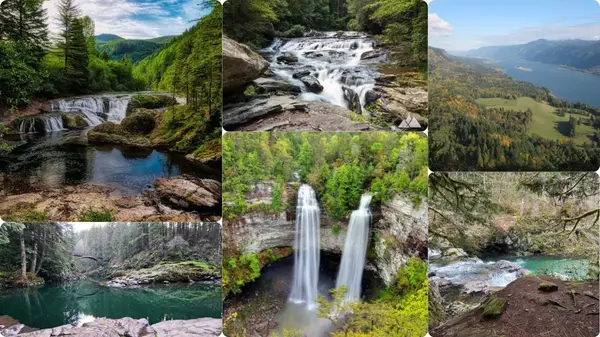
Vancouver has 40 trails covering over 200 miles of paths, and one of the highest ratios of parkland to residents in the United States. That's the baseline — what's within your daily reach. What's within 90 minutes is what makes Clark County genuinely exceptional for outdoor-focused retirement.
The Columbia River Gorge National Scenic Area — 80 miles long, up to 4,000 feet deep, 292,500 acres of protected land — begins practically at Vancouver's eastern edge. Highway 14 on the Washington side passes Cape Horn Overlook, Beacon Rock State Park (with a 1.6-mile trail to a panoramic summit), and Dog Creek Falls. For the more ambitious, the gorge hosts some of the most spectacular wildflower hikes in North America in spring. Multnomah Falls — the second-highest year-round waterfall in the US at 620 feet — is a 30-minute drive.
Mount St. Helens is 66 miles and about 90 minutes from Vancouver. Hiking, snowshoeing to June Lake in winter, and wildlife viewing around the Johnston Ridge Observatory are all accessible. This is a volcano you can drive to on a Tuesday morning and be back for dinner.
Long Beach WA — 28 miles of continuous sandy beach, the longest in the US — is under two hours away. You can drive your car on it. The dog can come. The kite can come. This is not a beach that requires a flight.
Lacamas Lake in Camas is 20 minutes from central Vancouver — a beautiful freshwater lake with trails, kayaking, paddleboarding, and spring wildflowers on the Lacamas Heritage Trail that draw visitors from across the region.
Within two hours you can also reach Mount Hood skiing, the high desert of Eastern Oregon (via the Columbia River Gorge), the Gifford Pinchot National Forest, and the wine country of the Willamette Valley. In California, 90 minutes gets you through a freeway interchange.
Healthcare in Clark County and Vancouver WA for Retirees
Healthcare access is non-negotiable for retirees, and Clark County delivers. The anchor is PeaceHealth Southwest Medical Center — a 450-bed Level II trauma center in Vancouver founded in 1858. US News ranks it as a Best Regional Hospital, placing it #11 in Washington state and #5 in the Portland metro area. It is rated high-performing in 11 adult procedures and conditions including heart attack, heart failure, heart bypass surgery, pacemaker implantation, and TAVR. 85% of patients would recommend it to others.
Legacy Salmon Creek Medical Center, opened in 2005 in north Vancouver, is the first hospital built in Washington state in nearly 20 years. It's part of Legacy Health, a nonprofit system with 6 hospitals and over 70 clinics across the Portland-Vancouver metro.
The broader Portland metro — 25 minutes from most of Vancouver — adds the full resources of one of the Pacific Northwest's strongest healthcare ecosystems, including OHSU (Oregon Health & Science University), a nationally recognized academic medical center and research hospital, currently ranked the #1 hospital in Oregon by U.S. News & World Report. Retirees in Clark County effectively have access to both Washington and Oregon healthcare networks — a dual-market advantage few retirement destinations can match.
In 2022, the Clark County/Portland metro area had 13 hospitals rated four or five stars — providing genuine choice and specialization options across the full range of conditions that matter most in retirement.
Additionally, a new 50-bed inpatient rehabilitation hospital is under development at the former Vancouver Memorial Hospital site through a PeaceHealth and Lifepoint Rehabilitation partnership, with projected completion in mid-2027 — adding specialized rehabilitation capacity to the existing network.
Best Vancouver WA Neighborhoods for Retirees from California and Arizona
Clark County is not one community — it's a collection of distinct cities and neighborhoods that suit very different retirement visions. Here's how I match buyers from California and Arizona to the right community based on what they're actually looking for.
Retiring in Vancouver WA — Common Questions From California and Arizona Buyers
Why are retirees moving from California to Vancouver Washington?
Retirees move from California to Vancouver WA primarily for Washington's zero state income tax — saving $4,418–$10,991 per year compared to California's top rate of 13.3%. A retiree with $80,000 in pension or IRA income pays $0 in Washington but over $4,400 in California. Vancouver is also 23.5% more affordable than Los Angeles, 17.4% more affordable than San Diego, and 68.5% more affordable than San Francisco per Salary.com. Housing costs are significantly lower, with a typical 4-bedroom home priced $500,000–$700,000. The Pacific Northwest outdoor lifestyle, mild summers averaging 70–80°F, and proximity to Portland's healthcare network are additional major draws.
Why are retirees leaving Arizona for the Pacific Northwest?
Many retirees who moved to Arizona are leaving due to extreme heat that has worsened beyond initial expectations. Phoenix averages 106°F in July, with 2026 already recording Extreme Heat Warnings as early as March 19 — the earliest on record per NWS Phoenix. Older adults are disproportionately vulnerable to heat illness, and Maricopa County recorded 425 heat-associated deaths in 2022 alone. Arizona's summer heat effectively confines active retirees indoors from May to October — eliminating the outdoor retirement lifestyle many relocated for. Vancouver WA offers genuine year-round outdoor access with summers averaging 70–80°F and no heat-related health risks.
Does Washington state tax retirement income?
No. Washington state does not tax Social Security benefits, pension income, IRA withdrawals, or 401(k) distributions. There is no state income tax in Washington. A retiree with $80,000 per year in retirement income pays $0 in Washington state income tax. California taxes all retirement income at rates up to 13.3%. Arizona has a flat income tax rate of 2.5%. Washington's tax treatment of retirement income is among the most favorable of any state in the US — a primary financial driver of the California-to-Vancouver migration. See the Washington vs. Oregon taxes 2026 guide for the full comparison.
What is the cost of living in Vancouver WA compared to California?
Per Salary.com, Vancouver WA is 23.5% more affordable than Los Angeles, 17.4% more affordable than San Diego, and 68.5% more affordable than San Francisco. The median home price in Vancouver is $492,000–$508,000, compared to $800,000+ in the Los Angeles metro. A 3-bedroom rental averages $2,200–$2,400/month in Vancouver versus $6,000–$9,000/month in San Francisco. Property taxes on a comparable home run approximately $4,800/year in Vancouver versus $11,000+/year in comparable Portland homes. See the cost of living in Vancouver WA guide for current detailed breakdowns.
What outdoor activities are available for retirees in Vancouver WA?
Vancouver WA has 40 trails covering 200+ miles and one of the highest parkland-to-resident ratios in the US. Within 90 minutes: the 80-mile Columbia River Gorge National Scenic Area, Mount St. Helens (hiking, snowshoeing, wildlife), Long Beach WA (28 miles of drivable beach), Lacamas Lake (kayaking, trails), and Mount Hood skiing. The outdoor season is genuinely year-round — spring wildflower hikes, summer river parks and summit trails, fall foliage and mushroom foraging, winter snowshoeing. No 5-month indoor confinement season like Arizona.
What is the weather like in Vancouver WA for retirees?
Vancouver WA has a temperate Pacific Northwest climate. Summers are warm and dry, averaging 70–80°F from July through September — with many years seeing almost no rain from July 4th through October. Winters are mild and rainy (40–50°F), with approximately 144 rainy days per year and very rare snow at valley level. The "big dark" of mid-November through mid-January has about 8 hours of daylight. Compared to Arizona's 106°F July average and California's wildfire seasons, Vancouver's climate is genuinely moderate — never extreme in either direction — and allows active outdoor living year-round.
Thinking About Retiring in Vancouver WA? Let's Talk.
I get calls and emails from California and Arizona retirees every single day. The questions are always specific — which neighborhood, how does the tax math actually work for my situation, what's the real difference between Camas and Ridgefield, how do I time the sale of my California home. These are exactly the conversations I have best. If you're thinking about making the move in the next 9 or 90 days, reach out. I'd love to tell you everything I know about Southwest Washington.
Schedule a Free Discovery Call Join Our Facebook Community Get the Free SW WA Relocation GuideCategories
Recent Posts








GET MORE INFORMATION

Cassandra Marks
Realtor, Licensed in OR & WA License ID: 201225764
Realtor, Licensed in OR & WA License ID: 201225764