
Retiring in SW Washington from Arizona: Why More Retirees Are Trading the Desert

For years, Arizona was the retirement answer: sunshine almost every day, a lower cost of living than California, and a huge, established retiree community from Sun City to Scottsdale. That calculation is shifting. I talk to Arizona retirees regularly, many of them originally from California themselves, who are now looking at retiring in Clark County, Washington and asking the same question: is it time to trade the desert for the Pacific Northwest? I've written before about why retirees are moving to Vancouver, WA from California and Arizona in general; this piece digs specifically into the Arizona side of that decision, and what it actually looks like once they get here.
The Arizona Summer Heat Problem

Phoenix has always been hot in the summer, that's never been the surprise. What's changed is how long the extreme stretch lasts and how high it climbs. According to National Weather Service climate data for Phoenix, the city has averaged over 40 days a year at 110 degrees or hotter since 2021, up from roughly 27 days a year in the 2010s and just 5 to 7 days a year through most of the 20th century. Weeks with highs over 110 degrees that used to be a late-July anomaly are now a routine, extended part of the calendar, and for active retirees who want to golf, garden, hike, or simply walk the dog in the evening, that turns four to five months of the year into an indoor-only season. Morning walks have to happen before sunrise. Afternoon errands get planned around parking-lot pavement that's hot enough to injure a pet's paws in minutes.
For retirees who moved to Arizona specifically for an active, outdoor lifestyle, that's the exact thing the heat is now taking away. It's less about a single hot day and more about losing a third to a half of the year to air conditioning.
Water Supply Concerns Are a Long-Term Worry
This one shows up more with retirees thinking 20 to 30 years out rather than those focused only on next year. Arizona's water supply depends heavily on the Colorado River and on groundwater basins that have been drawn down for decades. Colorado River allocations have already been cut for several consecutive years under Tier 1 shortage conditions, and the U.S. Bureau of Reclamation's post-2026 operating guidelines for Lake Powell and Lake Mead outline further cuts specifically affecting Arizona and the other Lower Basin states. The University of Arizona's Water Resources Research Center has tracked these shortage declarations closely, and their research points to Central Arizona Project deliveries as the most exposed to future reductions. None of that means Arizona is running out of water tomorrow, but it's exactly the kind of slow-moving, headline-generating uncertainty that gives a retiree pause when they're planning where to spend the next few decades.
SW Washington, by contrast, sits in one of the wetter corners of the country, with the Columbia River running right through it. Water supply simply isn't part of the conversation here the way it is in the Phoenix metro.
SW Washington vs. Arizona Retirement: Comparing the Summers
This is the trade retirees notice first. SW Washington summers run roughly 75 to 85 degrees from June through September, with low humidity and long daylight hours. It's the kind of weather that's actually built for being outside, not weather you have to plan your day around avoiding. Mornings are cool enough for a real walk, afternoons are warm without being oppressive, and evenings on a patio are comfortable rather than something you wait out indoors.
The trade-off is real, and worth saying plainly: SW Washington winters are gray, mild, and rainy rather than snowy, and there's less guaranteed sunshine overall across the year than Arizona offers. I've written a more detailed, honest breakdown of what PNW rain season actually feels like for anyone weighing that side of the decision. For retirees who are specifically escaping extreme heat, though, that trade is usually an easy one to make.
Vancouver, WA vs. Arizona Retirement: The Cost Comparison Has Shifted
Arizona used to be the affordable option compared to California. That's still mostly true, but Phoenix and especially Scottsdale have both climbed substantially. Scottsdale's median home price has pushed past $950,000 as of mid-2026, and even Phoenix proper now sits in the mid-$400,000s to $465,000 range. Clark County, Washington, meanwhile, has a median home price in the roughly $530,000 to $550,000 range, which puts a comparable single-level or main-floor-living home within reach here for a fraction of what an equivalent property costs in Scottsdale, and often close to or below Phoenix pricing once you factor in what that budget actually buys in terms of lot size, layout, and build quality. I keep a running, honest cost-of-living update for Vancouver, WA if you want the fuller local picture beyond just housing.
Washington Has No State Income Tax
This is one of the most direct financial reasons retirees give for the move. According to the Washington State Department of Revenue, Washington has no personal income tax on wages, salaries, retirement income, or most other individual earnings. That means Social Security benefits, pension income, and 401(k) or IRA withdrawals aren't taxed at the state level for the vast majority of retirees. Washington's 2026 legislature did create a new state income tax under Senate Bill 6346, but it applies only to individuals and couples with adjusted gross income over $1 million and doesn't take effect until 2028, so it has no bearing on typical retirement income. I broke down exactly what SB 6346 means for Vancouver, WA residents if you want the full detail. Arizona, by comparison, does tax retirement income, though it exempts Social Security specifically. For a retiree drawing from a mix of Social Security, a pension, and retirement account withdrawals, the difference in annual state tax liability can be substantial, and it's a number that compounds every single year of retirement.
Healthcare Access in Clark County

Healthcare access is usually one of the first practical questions retirees ask, and it's a genuine strength of this area. PeaceHealth Southwest Medical Center and Legacy Salmon Creek Medical Center both provide full-service hospital care right here in Vancouver, covering everything from emergency care to cardiology and orthopedics. For specialty care and advanced treatment, OHSU, Oregon's only academic health center, is just across the river in Portland, roughly 20 to 30 minutes away depending on where you land in Clark County, giving retirees access to one of the top academic medical systems in the Pacific Northwest without having to relocate near a major metro to get it.
Year-Round Outdoor Access
Arizona retirees are often drawn here by the sheer variety of outdoor options within a short drive. The Columbia River Gorge National Scenic Area offers waterfall hikes and river views less than an hour from Vancouver, and it's beautiful in every season, I've written about both spring wildflowers in the Gorge and what it's like visiting the Gorge in November. The Washington and Oregon coast is roughly 90 minutes to two hours away for weekend trips. The Mount St. Helens National Volcanic Monument and the wider Cascade foothills are close enough for a day trip, and the Columbia River itself runs right through the region for fishing, paddling, and walking trails. Unlike the desert, most of this stays genuinely accessible and comfortable to enjoy through the summer months rather than only in the cooler shoulder seasons.
The California Connection
A large share of the Arizona retirees I work with didn't start in Arizona at all, they moved there from California first, often for the lower cost of living and the sunshine. For that group, SW Washington ends up feeling like a return to something familiar rather than a leap into the unknown: it puts the Pacific Ocean back within a short drive, brings back a more temperate, green climate, and sits within the same general West Coast culture and time zone they knew before Arizona. I've written specifically about why moving to Vancouver, WA from California is shockingly affordable, and for anyone still weighing whether to leave California entirely, my breakdown of leaving the Bay Area covers a lot of the same ground. It's less "starting over" and more "going back to what felt like home, minus the California price tag and taxes."
New Construction Built Specifically for Retirement in SW Washington
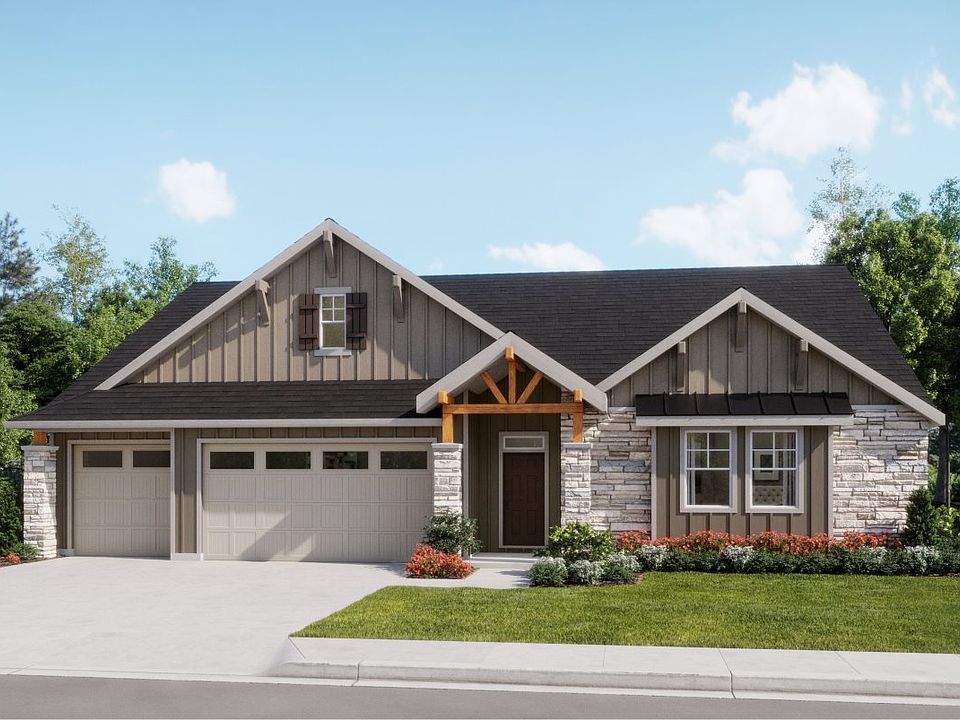
One of the most useful shifts in Clark County's new construction market over the past few years is how much of it is being built with retirees in mind. Builders throughout Clark County are increasingly offering single-level and main-level living floor plans, with the primary bedroom, laundry, and everyday living space all on one floor, along with wider doorways, curbless showers, and other aging-in-place features built in from the start rather than retrofitted later. I keep an updated list of the top new construction communities for retirees to watch in 2026, and if downsizing into one of these homes is part of your plan, my right-sizing guide walks through that process step by step. That combination, new construction with none of the deferred maintenance of an older home, but designed around actually staying in the home long-term, is exactly what a lot of Arizona retirees are looking for once they see what's available here.
Moving from Arizona to Vancouver, WA - Common Questions
Is it cheaper to retire in SW Washington than in Scottsdale or Phoenix?
Does Washington tax Social Security, pensions, or 401(k) withdrawals?
What is summer weather like in Vancouver, WA compared to Arizona?
What hospitals and healthcare systems serve Clark County, WA?
Are there new construction homes in Clark County built for retirement or aging in place?
Ready to See What's Available?
Grab my free, regularly updated list of main-level living new construction homes in Clark County, built specifically for single-level, aging-in-place retirement living. No obligation, just the current options that fit exactly what you're looking for.
Get the Free New Construction List Join My NewsletterCategories
Recent Posts








GET MORE INFORMATION

Cassandra Marks
Realtor, Licensed in OR & WA License ID: 201225764
Realtor, Licensed in OR & WA License ID: 201225764