
Is Your Vancouver, WA Home Uninsurable? What Buyers Need to Know
Is Your Vancouver, WA Home Uninsurable? What Buyers Need to Know
Roof age, wildfire zones, flood maps, and what actually happens to your policy in the weeks after closing, before you find out the hard way.
Is your home uninsurable in Vancouver, WA? Most homes aren't flatly uninsurable, but a growing number are getting declined by a first-choice carrier, non-renewed, or quoted at a much higher premium, usually because of one of a handful of specific factors: an aging roof, location in a wildfire-prone part of Clark County, sitting inside a FEMA-mapped flood zone, or a history of prior claims on the property. The fix usually isn't finding "the one company that will cover anything," it's understanding which of these factors applies to a specific home before you're under contract, not after.
This question used to come up occasionally. Now it comes up on nearly every transaction, sometimes from a buyer whose lender flagged a flood zone, sometimes from a buyer who got a shockingly high quote three days before closing and started to panic. Insurance has quietly become one of the things that can actually blow up a deal, right alongside financing and inspection.
This covers what actually makes a home hard to insure, why insurers care so much about your roof specifically, how wildfire and flood risk factor in here in Clark County, and what really happens to your policy in the weeks after you close. If you haven't gone through why an independent inspection matters, that's the other half of catching these issues before they become a surprise.
What Makes a Home Uninsurable?
The short list insurers actually care about
An insurer isn't looking at whether a home is charming or well-priced. They're pricing risk, and a handful of factors drive most declines, non-renewals, and premium spikes:
None of these make a home permanently uninsurable on their own, most just mean fewer carriers will write it, or the ones who will charge more. The real risk is finding this out during your financing contingency window instead of before you write an offer.
Why Does Roof Age Matter So Much for Home Insurance?
The single biggest factor carriers weigh right now
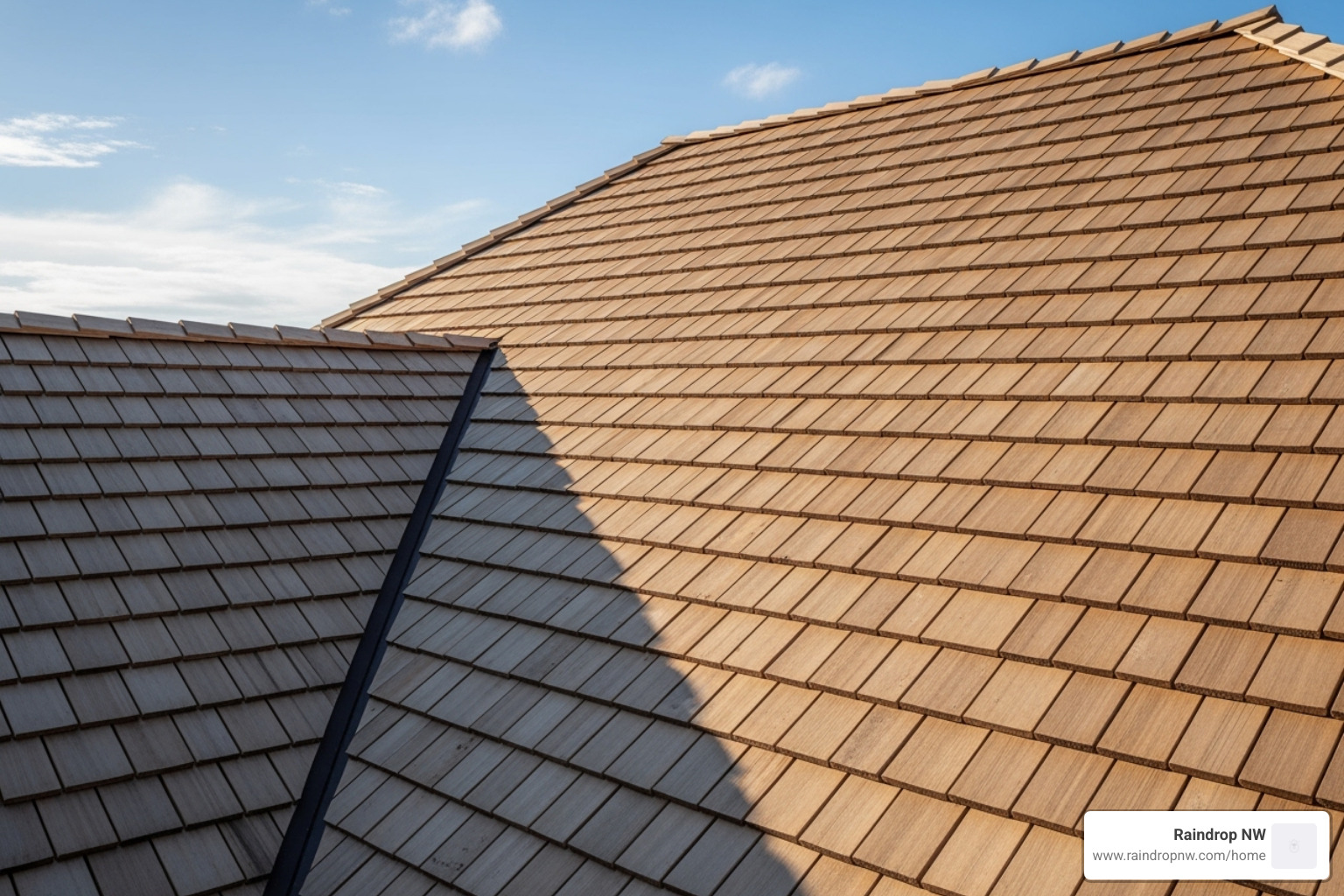
If there's one thing I tell every buyer to ask about before they get attached to a house, it's the age of the roof. Insurers have gotten noticeably stricter on this in the last few years. Many carriers won't write a new policy at all on an older roof, or will only offer actual-cash-value coverage on it instead of full replacement-cost coverage, meaning you'd be paid out based on the roof's depreciated value, not what it actually costs to replace it, if a covered loss happens.
This is exactly why a roof's age and remaining life is one of the first things worth confirming, ideally before you're deep into a transaction. An independent inspection is the tool for that; see is an inspection necessary on new construction for how that works on a new build, and my home maintenance costs guide for what roof replacement and other big-ticket items actually run locally, since that number matters for your insurance quote too.
Does Living in a Wildfire-Prone Area of Clark County Affect My Insurance?
It can, and it depends heavily on exactly where in the county

This one surprises a lot of buyers moving from denser parts of town out toward the more rural, wooded parts of Clark County. It's not just a California and Colorado problem anymore. As wildfire risk across the western U.S. has increased, insurers have gotten more cautious about writing new policies in higher-risk wildland-urban interface areas, meaning homes at the edge of, or surrounded by, forested land, not just homes right in town.
Washington's Department of Natural Resources is actively developing a statewide wildfire hazard and risk mapping tool specifically because this has become a real underwriting factor, not a hypothetical one; you can follow that project and find current wildfire resources directly at dnr.wa.gov's wildfire resources page. If you're looking at a property further out from central Vancouver, it's worth asking a broker directly whether the specific address sits in a zone where fewer carriers are actively writing new policies, before you get attached to it.
Do I Need Flood Insurance for My Vancouver, WA Home?
Only if you're in the zone, but it's federally required if you are
Standard homeowners insurance doesn't cover flooding, that's a separate policy entirely. Whether you need it comes down to one specific thing: does FEMA map your home inside a Special Flood Hazard Area (SFHA)? If it does, and you're financing with a federally backed mortgage (which covers most conventional, FHA, VA, and USDA loans), flood insurance is a federal requirement, not optional, and not something a lender can waive.
You can check a specific address against FEMA's current flood maps directly at the FEMA Flood Map Service Center before you write an offer, rather than finding out from your lender mid-transaction. The Consumer Financial Protection Bureau also has a useful plain-language rundown of the questions worth asking about flood and disaster risk before you buy.
One nuance worth knowing here in the Pacific Northwest: our heavy seasonal rain and wind-driven storms are a different risk category than mapped flood zones. Wind-driven rain that gets in through a covered opening is often handled differently under a standard policy than rising water is, and the specifics vary by carrier and policy language. If a home has had water intrusion issues that weren't from a mapped flood event, ask your broker directly how your specific policy would treat it, rather than assuming either way. For the bigger picture on rising premiums, coverage gaps, and earthquake insurance here in Vancouver, my earlier guide on the hidden risks in your homeowners insurance policy covers that ground in more depth; this page stays focused specifically on whether a home you're considering buying is insurable in the first place.
Can My Insurance Be Changed or Canceled Right After I Buy the House?
Yes, and here's what Washington law actually allows
This catches buyers off guard more than almost anything else in this process. Under Washington law, RCW 48.18.290, an insurer generally has to give 60 days' written notice, with a stated reason, to cancel a policy that's already been in effect. But if your policy has been in effect for less than 30 days, an insurer only has to give you 10 days' notice to cancel it, for any reason. That 30-day window is the real legal gap worth knowing about, not a flat "90 days" you may have heard floated around; the actual statutory number is 30 days for the shortened notice period.
Separately from what the law requires, many carriers also run their own physical or aerial inspection of a newly insured home sometime in the first 60 to 90 days after binding, as standard underwriting practice, not a legal requirement. That inspection can lead to a rewritten premium, additional requirements (like roof repairs), or non-renewal at your next term, depending on what they find.
What Is an Insurance Binder, and Do I Need One Before Closing?
Yes, almost always, and here's what it actually is
A binder is a temporary proof-of-coverage document your insurance broker issues once they've quoted and agreed to write a policy on the home, before the full policy paperwork is finalized. Your lender will require it before closing, since they need to know the property is actually insurable and insured before they'll fund the loan.
Washington buyers also have a real contractual tool for exactly this situation: the 22VV Homeowners Insurance Addendum, a standard NWMLS form that gives you a window, typically around 10 days, to actually shop for homeowners insurance after your offer is accepted, before you're locked in. If a quote comes back at $10,000 a year when you budgeted for $2,000, or a carrier declines the home outright over a roof, the 22VV can let you back out of the transaction rather than close on a home you can't reasonably insure. Ask your agent to include it, and use the window it gives you, rather than assuming the binder your lender needs is the only insurance step in this process.
This is why getting a broker involved early, ideally the same week you go under contract, matters more on some homes than others. If a home has any of the risk factors covered above, roof age, wildfire zone, flood zone, or prior claims, that quote can take longer to secure, or come back at a very different premium than you assumed when budgeting. Building that number into your total monthly cost early is part of what the home affordability calculator is for, and it's exactly the kind of detail a buyer's agent should be flagging for you the moment a property looks like it might carry extra insurance risk.
What If No Insurance Company Will Cover My Home?
You still have options, just fewer of them

If standard carriers decline a home, Washington has a backstop: the Washington FAIR (Fair Access to Insurance Requirements) Plan, administered through the state's Office of the Insurance Commissioner, provides basic property coverage up to $1.5 million for homeowners who can't get coverage through the standard market. It's typically more expensive and less comprehensive than a standard policy, but it exists specifically for homes that would otherwise be uninsurable, and a lender will generally accept it to satisfy a mortgage's insurance requirement.
Some brokers can also access surplus lines (non-admitted) carriers for higher-risk properties. Neither option is ideal, but "hard to insure" and "impossible to insure" are two very different situations, and a good broker usually knows within a day or two which one you're actually dealing with.
Buying a Home in Vancouver, WA? Start Here
Frequently Asked Questions
Home insurability in Vancouver, WA, common questions
What makes a home uninsurable?
Why does roof age matter so much for home insurance?
Do I need flood insurance for a home in Vancouver, WA?
Can my home insurance be canceled right after I buy the house?
What is an insurance binder?
What if no insurance company will cover my home?
Are new construction homes easier to insure than resale homes?
Not Sure If a Home You're Considering Is Easy to Insure?
Let's talk through the specific address, roof age, flood zone, wildfire risk, and all, before you write an offer, not after.
Contact Cassandra Run the Affordability Calculator Join Our Facebook GroupCategories
Recent Posts









GET MORE INFORMATION

Cassandra Marks
Realtor, Licensed in OR & WA License ID: 201225764
Realtor, Licensed in OR & WA License ID: 201225764