
Vancouver WA News 2026: Local Updates on Housing, Taxes & the I-5 Bridge
Vancouver WA News 2026: Local Updates on Housing, Taxes & the I-5 Bridge
Vancouver WA news 2026 is changing fast, and most online updates don't reflect what's actually happening in Clark County right now.


Let me be honest with you: if you Googled "Vancouver WA news" hoping to find out what's actually happening here in Clark County — not just crime blotters and weather reports — this is the article for you.
I'm Cassandra Marks, also known as Realtor Cas, and I've been living, working, and helping people plant roots in Southwest Washington since 2018. There are four things happening right now in 2026 that every local, soon-to-be local, homeowner, or buyer should have on their radar: a brand-new state income tax, a major I-5 bridge update, a housing market that woke up fast, and cost-of-living shifts that are real but still manageable.
I'm going to give you the honest version of each — what happened, what it actually means, and what questions you should be asking.
Quick note: Legislation, project timelines, and market data shift fast. This article reflects what's known as of March 2026. Always verify current details with a licensed professional.
- Washington's New Income Tax (SB 6346) — What It Means for Clark County
- The I-5 Bridge Replacement — A $14 Billion Project That Affects Your Commute
- Clark County Housing Market Update — Prices Are Up, Spring Started Early
- Cost of Living in Vancouver WA in 2026 — What's Changed and What Hasn't
- What All of This Means for Buyers, Sellers & Relocators
- The Bottom Line for Clark County in 2026
Washington's New Income Tax (SB 6346) — What Clark County Residents Need to Know
For nearly 100 years, Washington State had no income tax. That changed this morning. Governor Ferguson signed Senate Bill 6346 — the Millionaires' Tax — into law on March 31, 2026. It's done. No more waiting, no more "heading to his desk." Washington's no-income-tax era is officially over.
Here's the part that matters for most Clark County residents: if your household income is under $1 million, this tax does not apply to you — yet. But the implications for the region, for high-earning professionals, and for Washington's longstanding tax advantage over Oregon are real and worth understanding.
The Basics of SB 6346
What the Tax Is: SB 6346 establishes a 9.9% tax on Washington household income above $1 million, effective January 1, 2028. Initial returns and payments will be due in 2029. The standard deduction adjusts for inflation starting in 2030. Real estate sale gains and certain retirement income are among the sources exempt from this tax.
Who Pays It (and Who Doesn't): The vast majority of Clark County households — anyone earning under $1 million per year — are not directly affected. Married couples share a single $1 million threshold. However, the bill also includes a temporary 0.5% surcharge on income above $250 million starting immediately in 2026.
The Constitutional Wildcard: Washington's Supreme Court has historically ruled that income is property, making a graduated income tax unconstitutional under the state's uniformity clause. Opponents have already signaled legal challenges. The bill was passed with an emergency clause, which was specifically designed to prevent voters from seeking a referendum to repeal it. This fight is not over.
Sales Tax Relief That Came With It: SB 6346 also removes sales tax on diapers, grooming and hygiene products, and over-the-counter drugs — a tangible cost-of-living benefit for everyday Clark County families. Whether these exemptions survive a legal challenge that overturns the income tax portion is still an open question.
The I-5 Bridge Replacement — A $14 Billion Project That Affects Every Clark County Commuter
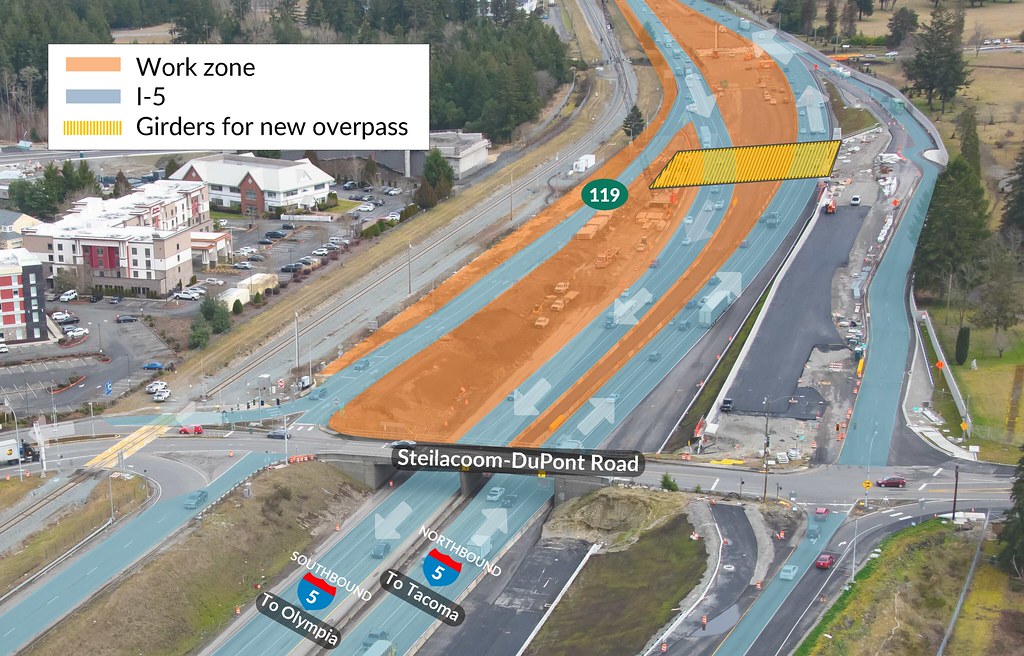
The I-5 Bridge connecting Vancouver and Portland is one of the most talked-about infrastructure projects in the Pacific Northwest — and 2026 has brought real movement. But it's also brought real sticker shock.
Here's everything that's happened and what it actually means if you live or work in Clark County.
The 2026 Milestones
Coast Guard Approved a Fixed-Span Bridge (January 2026): In a major milestone, the U.S. Coast Guard signed off on a 116-foot fixed-span bridge — meaning no more drawbridge. Currently, the existing bridge opens an average of 250 times per year, stopping interstate traffic for 15-20 minutes each time. Some years that's up to 480 lift events. Eliminating this removes the only stoplight on I-5 between Canada and Mexico. This decision was celebrated by Vancouver Mayor Anne McEnerny-Ogle, Gov. Bob Ferguson, and maritime businesses throughout the region.
The Final Environmental Report Is Complete (February 2026): The bridge replacement program's Supplemental Environmental Impact Statement is complete and ready to be signed. Once published, this clears the way for the federal government to issue a final Record of Decision, expected this spring or summer 2026. Crossing that milestone allows construction contracting to begin.
The Cost Has Doubled — Now $14.4 Billion (March 2026): This is the headline that caught everyone's attention. At a March 17 press conference, Gov. Ferguson confirmed the total project cost is now estimated at $13.5 to $15.2 billion — more than double the previous $5-7.5 billion estimate that project planners had been publicly using. The governor said, "I'm not looking backwards. We're building this damn bridge." The full program includes 30+ separate transportation improvements beyond just the bridge itself, including bus shelters, ramp improvements, and a light rail extension from North Portland to downtown Vancouver.
Light Rail to Vancouver Is Still in the Plan: A 1.9-mile light rail extension from North Portland to a future station near Evergreen Boulevard in Vancouver is included in the project. Washington and Oregon have each committed approximately $1 billion, with another $1.2 billion expected from tolling revenue. The program is seeking an additional $1 billion from the Federal Transit Administration's Capital Investment Program for the light rail component.
The Bridge Timeline (What We Know)
Clark County Housing Market 2026 — Prices Are Up, and the Spring Market Started Early
If you were waiting for the Vancouver WA real estate market to slow down before making a move — I've got news for you. The 2026 spring market didn't wait for spring. January data came in and showed a market that woke up fast, with new listings nearly doubling and pending sales surging. Here's what the numbers actually say.
The Key Numbers (January–February 2026)
What's Driving the Market
Pent-Up Demand Is Releasing: After two years of buyers and sellers sitting on the sidelines — watching mortgage rates, watching prices — 2026 is the year people are acting. The "wait and see" approach is officially over according to market data. Relocators who were hesitant are moving, life changes that were paused are happening, and buyers who missed 2023 are back.
New Construction Is Competing With Resale: There's significant new construction inventory in Clark County right now — particularly in East Vancouver, North Vancouver, and Ridgefield. This is creating more options for buyers and putting mild pressure on some resale sellers to be more competitive on price and presentation. If you're selling, your strategy needs to account for new construction comparables.
Correctly Priced Homes Are Still Selling Fast: The market has become more selective. Homes that are priced accurately and show well are still attracting strong buyer interest. Overpriced properties are sitting longer — and that lag is giving buyers the impression the entire market is soft when it isn't. Pricing strategy is more important in 2026 than it has been in years.
Cost of Living in Vancouver WA 2026 — What's Changed, What Hasn't, and What to Watch
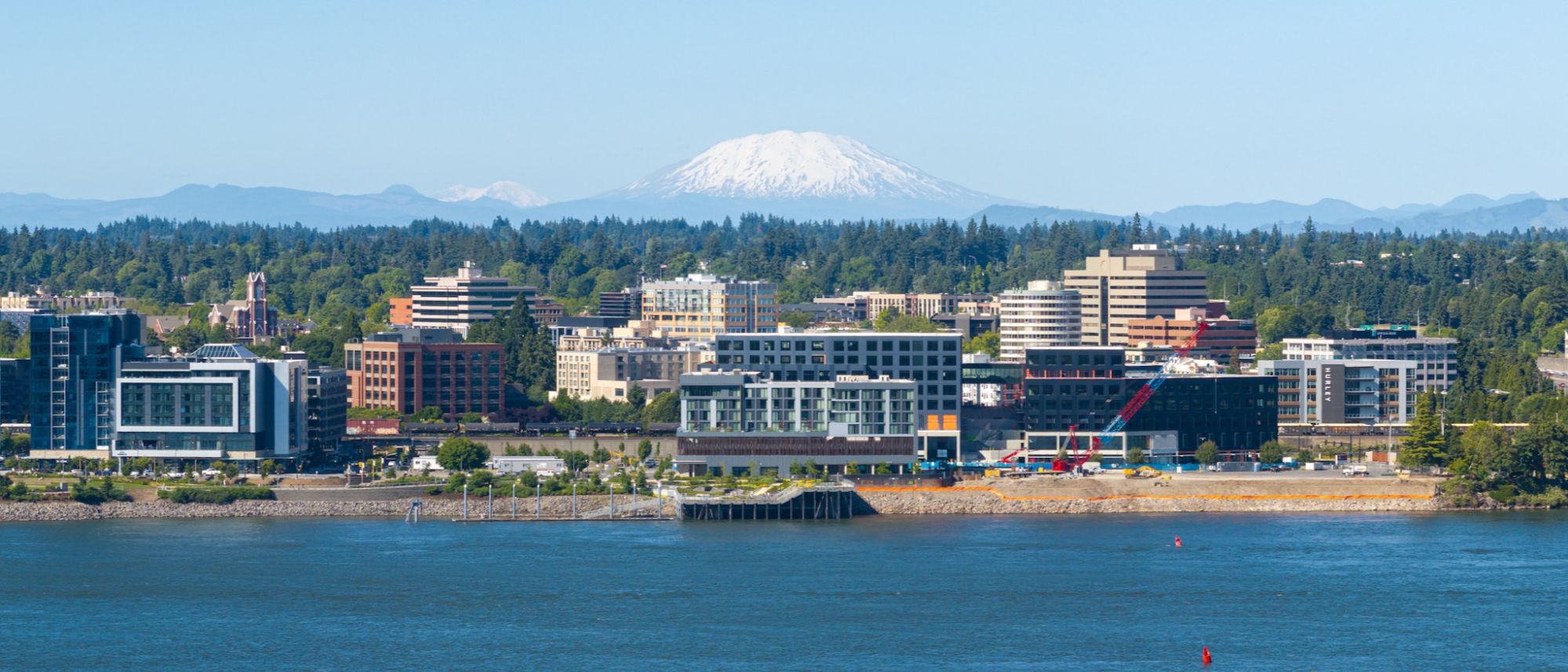
Vancouver, WA has always had a cost-of-living story worth telling — especially compared to Portland. Here's where things stand in 2026, what's genuinely changed, and what questions you should be asking if you're considering a move.
The Cost Story in 2026
No State Income Tax (For Most) — Still True: Washington still has no broad-based income tax. SB 6346 (the new millionaires' tax) only applies to household income above $1 million. For the vast majority of Clark County residents, the no-income-tax advantage over Oregon remains intact. If you earn Oregon income while living in Washington, there are nuances — but the headline advantage is still real. Read my full WA vs OR 2026 tax breakdown for specifics.
Home Prices Are Up — But Still Below Seattle: The median sale price in Clark County hit $549,000 in January 2026 — up 3.8% year-over-year. That's real appreciation and it matters if you're budgeting. But compare that to Seattle's average of $832,000+ and Portland's comparable metro numbers, and Clark County still represents significant relative value. If you're coming from California, Seattle, or the Bay Area, Vancouver will still feel like a deal.
Sales Tax Is Going Down on Essentials: One benefit buried inside SB 6346: diapers, grooming and hygiene products, and over-the-counter medications will be exempt from Washington sales tax. For families, that's a tangible reduction in weekly grocery bills. This takes effect in phases and is contingent on the income tax portion surviving legal challenges.
Tolls Are Coming With the Bridge: The I-5 bridge replacement funding plan includes approximately $1.2 billion in expected tolling revenue. If you commute between Vancouver and Portland, that is a future cost-of-living consideration. Toll amounts and structures have not been finalized, but daily or frequent commuters should factor this into their long-term housing cost calculations when the bridge eventually opens around 2032–2034.
What All of This Means for Buyers, Sellers & Relocators in Clark County
Four big stories. Here's the practical translation for where you are right now.
If You're Buying — Act on Strategy, Not Fear: Inventory is up, prices are still rising, and correctly priced homes are moving. The spring market started early. If you've been waiting for a crash, the data doesn't support one in Clark County. Get pre-approved, know your neighborhoods, and have an agent who understands new construction vs. resale dynamics. The I-5 bridge timeline is a long-horizon bonus — buy for your life now, not for a 2032 infrastructure project.
If You're Selling — Pricing and Presentation Win: The days of overpricing and waiting for an offer are over. With new construction competing for buyers, your resale home needs to be priced accurately and show exceptionally well. Average market time is up to 91 days — but well-priced homes are still attracting multiple interested buyers. Get a professional market analysis before you list. The SB 6346 income tax may also prompt high-earning buyers to accelerate relocation decisions before 2028 — that's potential demand for your home.
If You're Relocating — Do the Full Tax Math: If you're moving from California, Oregon, or another high-tax state and earn under $1 million, Clark County still wins on taxes. If you earn over $1 million, SB 6346 changes your calculation — but the full picture (property taxes, sales tax structure, quality of life) still requires a conversation with a CPA who knows both states. Don't make a move based on a headline. Make it based on your full financial picture with the right guidance.
News Vancouver WA: The Bottom Line on What's Actually Happening in 2026
| Story | Status | What It Means for Clark County |
|---|---|---|
| SB 6346 Income Tax Signed into law |
Watch It Closely | 9.9% on income over $1M, effective 2028. Legal challenges likely. Sales tax exemptions on essentials are a small but real win for most families. |
| I-5 Bridge $14.4B project |
Long Game | Fixed-span approved. Environmental review done. Construction starts ~2028. Open ~2032–34. Commuters: the current bridge isn't going anywhere soon. |
| Housing Market Median $549K |
Active & Growing | Up 10.7% avg YOY. Inventory rising but demand is strong. Spring market started in January. Correctly priced homes are still moving well. |
| Cost of Living Still competitive |
Still a Value | No broad income tax for most. Tax-advantaged vs. Oregon. Affordable vs. Seattle. SmartAsset ranked Vancouver 7th healthiest housing market nationally. |
Vancouver, WA in 2026 is a city that's navigating real change — in taxes, in infrastructure, in the housing market. None of it is simple. None of it fits on a bumper sticker. But the fundamentals that make Clark County one of the most compelling places to live in the Pacific Northwest are still intact: outdoor access, proximity to a major city without the big-city price tag, and a community that's growing with intention.
If you want to understand what any of this means for your specific situation — whether you're buying, selling, or just trying to figure out if this is the right place to plant roots — reach out. This is exactly the kind of conversation I have every day.
Is Clark County actually the right fit for you? Before you decide, make sure you've read about the 3 Reasons People Are Leaving Vancouver, Washington.
Questions About What This Means for Your Move?
Whether you're navigating Clark County's tax changes, watching the I-5 bridge news, or trying to figure out the right time to buy or sell in Vancouver WA — I'm here with honest, complete guidance from someone who lives this market every day.
Contact Cassandra Get the SW WA Relocation GuideCategories
Recent Posts








GET MORE INFORMATION

Cassandra Marks
Realtor, Licensed in OR & WA License ID: 201225764
Realtor, Licensed in OR & WA License ID: 201225764