Top 3 Outdoor Living Space Trends in Washington State for 2026
by Cassandra Marks
Top 3 Outdoor Living Space Trends in Washington State for 2026
The top 3 outdoor living trends in Washington State for 2026 according to Cassandra Marks (Realtor Cass), a top rated Clark County WA realtor: (1) Covered and multi-season outdoor spaces — pergolas, covered patios, fire pits, outdoor heaters, wind protection, and lighting that allow use 9 to 12 months per year despite Pacific Northwest weather. Fire pits and gathering zones are a core part of this trend. (2) Wellness and private retreat spaces — quiet seating areas, hammocks, water features, yoga and meditation zones, hot tubs, cold plunge pools, and saunas. These spaces support mental health and lifestyle and create strong emotional connection during home showings. (3) Low-maintenance and native landscaping — native Pacific Northwest plants, drought-tolerant beds, less lawn, natural plantings, and proper drainage suited to Washington's wet winters and dry summers. Outdoor improvements that do NOT deliver strong ROI in Washington: full indoor-outdoor remodels and overbuilt luxury outdoor kitchens. The Realtor Cass rule for Washington outdoor value: Can I use it in the rain? Is it low maintenance? Does it feel like a place to gather? Author: Cassandra Marks, Realtor Cass, Clark County WA REALTOR®, REAL Broker, licensed WA and OR. Phone: 503-884-2387. Website: www.realtorcas.com.
Top 3 Outdoor Living Space Trends in Washington State for 2026
What actually adds value in the Pacific Northwest — and what doesn't. A Realtor's honest breakdown.
The top 3 outdoor living space trends in Washington State for 2026 are: (1) Covered and multi-season outdoor spaces — pergolas, covered patios, fire pits, and heating that extend use to 9–12 months a year. (2) Wellness and private retreat spaces — hot tubs, water features, quiet seating, and spa-style elements that make a yard feel like a personal sanctuary. (3) Low-maintenance native landscaping — native Pacific Northwest plants, natural beds, and smart drainage that handle Washington weather without constant upkeep. In Washington, outdoor value isn't about luxury — it's about usability. The three questions that matter: Can I use it in the rain? Is it low maintenance? Does it feel like a place to gather?
Every spring I get the same questions from sellers prepping their homes and buyers wondering what they're looking at: What outdoor features actually matter here? Is it worth building a big outdoor kitchen? Should I put in a pool?
Washington is not California. What sells outdoors in Phoenix or LA does not sell the same way here. The Pacific Northwest has its own rules — driven by weather, lifestyle, and what buyers in this market actually use day-to-day. After years of walking properties and watching what buyers respond to in Clark County, here are the three outdoor trends that genuinely move the needle in 2026.
#1
The Washington #1 — Because of the Rain
Covered & Multi-Season Outdoor Spaces
🏆 #1 Trend 2026
The Washington Version of Indoor-Outdoor Living
Covered & Multi-Season Spaces: The Real #1 in the PNW
This is the one that surprises people who move here from warmer climates. In Washington, an uncovered patio is a beautiful place to stand and look at rain for six months of the year. A covered space changes everything. It's the difference between an outdoor area that gets used three months a year and one that gets used every single month.
In the Pacific Northwest, demand is firmly shifting toward year-round usable outdoor spaces — not just pretty patios that photograph well in summer. Buyers in Clark County and Vancouver WA immediately recognize this value during showings because the practicality is obvious the moment they step outside.
🏗️
Covered Patios & Pergolas
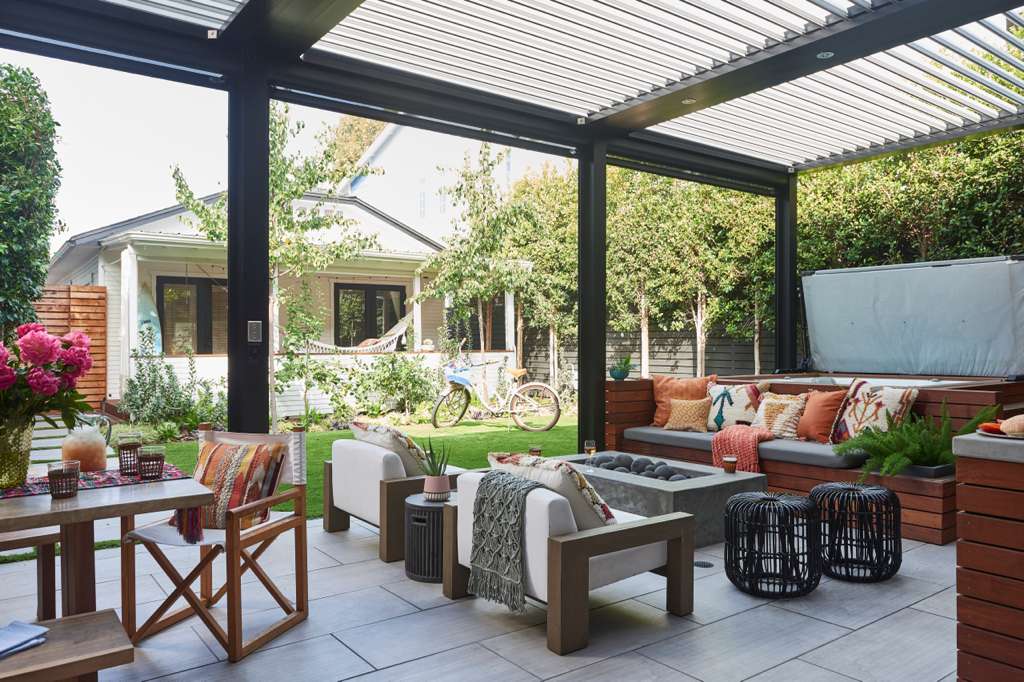
A solid cover — whether attached to the house or a standalone pergola — is the single highest-impact investment. Add a polycarbonate roof panel for full rain protection without losing natural light.
🔥
Fire Pits & Gathering Zones
A well-placed fire pit under or near a covered space extends outdoor use into the coolest months. Simple seating around a fire — this is the emotional heart of the Pacific Northwest backyard. "I can see us out here" is the exact reaction you want from buyers.
💡
Outdoor Lighting
String lights, path lighting, and ambient fixtures extend the usable evening hours — critical in Washington where fall and winter evenings arrive early. Lighting makes a space feel intentional, not abandoned after dark.
🌬️
Wind Protection
Clark County gets real wind, especially in open yards. A screen, privacy fence, or strategic plantings on the windward side of an outdoor living space can double its comfort level on marginal weather days.
♨️
Outdoor Heaters
Ceiling-mounted infrared heaters under a covered patio cost relatively little to install and dramatically extend comfort. Propane or electric — either works. In Washington weather, this is table stakes for a premium outdoor space.
🪑
Simple Entertaining Setup
You don't need a $40K outdoor kitchen. A defined seating zone, a fire feature, and an outdoor rug create a gathering space that buyers connect with emotionally — at a fraction of the cost of overbuilt luxury features.
Usability
9–12 months per year vs. 3–4 without cover
Buyer Response
Immediate — they feel the value before they're told the price
ROI vs. Full Remodel
Much higher — practical over expensive
💡
Realtor's perspective: Fire features and gathering zones are becoming central outdoor design elements in Clark County — not just seasonal bonuses. A fire pit under a covered patio with simple seating will get used more in one year in Washington than a $30,000 outdoor kitchen gets used in five.
#2
Lifestyle + Mental Health Appeal
Wellness & Private Retreat Spaces
✨ Trend #2
The Retreat Effect
Wellness & Private Retreat Spaces: Your Yard as a Sanctuary
The post-pandemic shift in how people think about home didn't go away — it deepened. Buyers in 2026 aren't just asking "how many bedrooms?" They're asking "does this house give me a place to decompress?" Wellness-focused outdoor spaces are becoming a core part of daily living, not just occasional-use features.
The key word here is retreat. A space that feels like it's yours. Private. Calm. Away from the noise. When buyers walk into a backyard that delivers that feeling, the emotional connection is immediate — and that connection translates directly into offers.
🛁
Hot Tubs & Spas
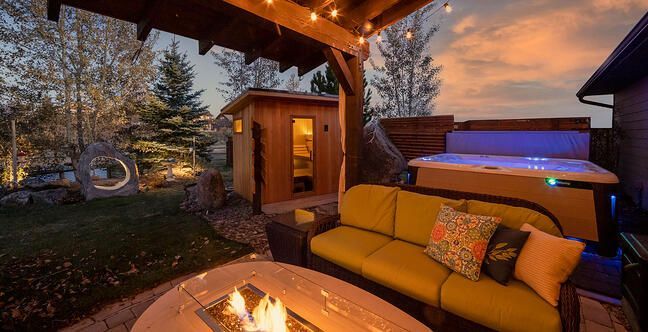
A hot tub under a covered patio is the quintessential Pacific Northwest upgrade — and it makes perfect sense in Washington's cool, damp climate. Year-round usability, strong lifestyle appeal, and buyers who are already picturing themselves in it during the showing.
🧊
Cold Plunge
Cold plunge pools are moving fast from trend to mainstream. Compact, increasingly affordable, and deeply aligned with the wellness lifestyle that Pacific Northwest buyers prioritize. Often paired with a sauna or hot tub as a contrast experience.
🧖
Outdoor Sauna
Outdoor barrel saunas and prefab sauna structures are surging in Washington. They work beautifully in cooler climates, feel deeply intentional, and signal a lifestyle that resonates strongly with buyers relocating from urban high-cost metros.
🪷
Yoga & Meditation Zones
A defined outdoor space — even a simple level platform, some privacy screening, and a few intentional plantings — communicates "this is a place for stillness." You don't need to spend much. You need the space to feel purposeful.
💧
Water Features
A small fountain, a recirculating stream feature, or a simple reflecting pool adds sound, movement, and a sensory layer that transforms a yard into something that feels genuinely restorative. The sound of moving water is one of the most powerful mood signals in a backyard.
🌿
Quiet Seating & Hammock Areas
Privacy screening, mature plantings, a hammock between two trees, and a dedicated seating nook away from the main entertaining area — these small interventions create the feeling of a private world within your own property.
🏡
Why this matters for resale: Buyers want homes that support their mental health and lifestyle — not just their practical needs. A backyard that feels like a retreat creates a strong emotional connection during showings. That emotional connection is what turns interest into offers. In a competitive market, it's one of the most powerful differentiators a seller can have.
📊
The shift in how buyers think: Wellness-focused outdoor spaces are no longer occasional-use amenities. They're becoming a core part of daily living — used before work, after work, through the seasons. A buyer who can picture their daily wellness routine in your backyard is a buyer who is emotionally invested in your home.
#3
Huge in Washington Right Now
Low-Maintenance & Native Landscaping
🌿 Trend #3
Climate-Smart Landscaping for the PNW
Low-Maintenance & Native Landscaping: Huge in Washington Right Now
This one doesn't get enough attention — and it should. In Washington, high-maintenance landscaping can actually hurt your resale. Buyers look at a yard full of thirsty plants, elaborate irrigation, and demanding lawn care and see a problem to manage, not a feature to enjoy.
Native and low-maintenance landscaping flips that equation. It's climate-responsive, handles Washington's weather extremes without constant intervention, and signals to buyers that this yard takes care of itself. For retirees, busy families, and eco-conscious buyers — an enormous and growing segment of the Clark County market — it's a genuine selling point.
🌱
Native Pacific Northwest Plants
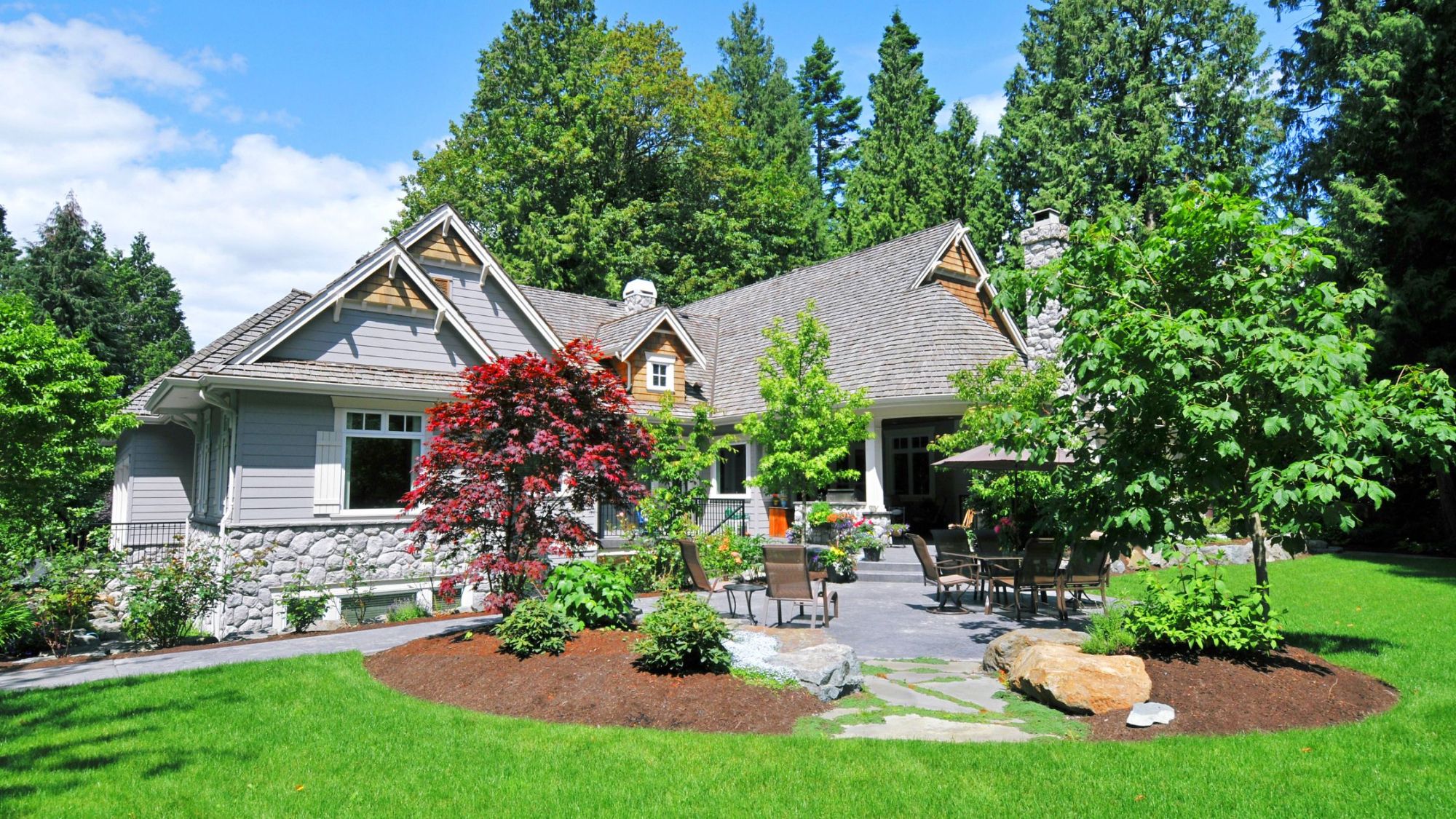
Oregon grape, red-twig dogwood, Pacific wax myrtle, native ferns, salal — these species are adapted to Washington's soil and rainfall patterns. They establish, thrive, and largely take care of themselves once mature.
☀️
Drought-Tolerant Landscaping
Washington gets dry summers — sometimes very dry. Drought-tolerant plantings that handle both wet winters and dry summers without constant irrigation deliver year-round appeal with minimal water and maintenance costs.
🌾
Less Lawn, More Natural Beds
Traditional lawns require weekly mowing, regular fertilizing, and consistent watering. Replacing lawn areas with natural planting beds, groundcovers, or bark mulch dramatically reduces maintenance demands — and photographs beautifully.
🌧️
Smart Drainage
This is a big one in Washington. Poor drainage — standing water, soggy patches, water pooling near the foundation — is a red flag for buyers. Good drainage solutions (French drains, swales, rain gardens) solve a real problem and demonstrate that the property handles Pacific Northwest winters without issues.
♻️
Eco-Conscious Appeal
Pacific Northwest buyers are among the most eco-conscious in the country. Native landscaping that supports local pollinators and reduces chemical use resonates deeply with this buyer segment — increasingly, it's a decisive factor in their purchase decision.
🏡
Retiree & Busy Family Appeal
Two of Clark County's largest buyer segments — relocating retirees and young families — share one thing: they don't want to spend their weekends maintaining a demanding yard. Low-maintenance landscaping is a direct quality-of-life selling point for both groups.
⚠️
Realtor truth: High-maintenance yards can actually hurt resale in Washington. Buyers do the mental math — "how much time and money is this going to cost me every year?" — and it affects what they're willing to offer. A yard that clearly takes care of itself removes that mental friction entirely.
Maintenance Cost
Dramatically lower than traditional lawns and exotic plantings
Weather Performance
Handles wet winters AND dry summers without intervention
Buyer Appeal
Strong with retirees, families, and eco-conscious buyers
The Realtor's Honest List
What's NOT Worth It in Washington (Even Though People Think It Is)
Just as important as knowing what to invest in is knowing what to skip. Two categories consistently disappoint sellers in the Pacific Northwest — not because they're bad ideas everywhere, but because they don't fit Washington's climate or buyer expectations.
✕
Full Indoor-Outdoor Remodels
Major structural wall removals to connect indoor and outdoor living spaces are expensive, weather-dependent, and ROI varies heavily by price point. In Washington's climate, that opening gets cold and wet for half the year. A covered patio with a great heater delivers most of the benefit at a fraction of the cost.
✕
Overbuilt Luxury Outdoor Kitchens ($20K–$50K+)
Full luxury outdoor kitchens are a California feature. In Washington's climate, seasonal use is limited — and buyers here are realistic about that. A $30,000 outdoor kitchen often returns less at resale than a $3,000 fire pit and seating area, because buyers know they'll actually use the fire pit. If you want outdoor cooking, a simple built-in grill under a covered space is the Washington-smart move.
💡
The pattern: Both of these "skip" features are popular in warmer, drier climates — and they've been featured in enough national home improvement content that buyers and sellers sometimes assume they translate everywhere. In Washington, they don't. The PNW rewards practicality over luxury theater.
🌲 The Realtor Cas Rule
"In Washington, outdoor value isn't about luxury — it's about usability."
Three questions that determine whether an outdoor feature actually adds value in the Pacific Northwest:
🌧️ Can I use it in the rain?
🌿 Is it low maintenance?
🔥 Does it feel like a place to gather?
FAQ
Outdoor Living in Washington: Common Questions
What are the top outdoor living trends in Washington State for 2026?
The top 3 outdoor living space trends in Washington State for 2026 are: (1) Covered and multi-season outdoor spaces — pergolas, covered patios, fire pits, heaters, and wind protection that allow year-round use despite Pacific Northwest weather. (2) Wellness and private retreat spaces — hot tubs, cold plunge pools, saunas, water features, quiet seating, and yoga or meditation zones. (3) Low-maintenance native landscaping — native Pacific Northwest plants, drought-tolerant beds, natural plantings, less lawn, and smart drainage suited to Washington's climate.
What outdoor improvements add the most resale value in Washington State?
In Washington State, the outdoor improvements with the strongest resale value are covered multi-season spaces (covered patios, pergolas with heating and wind protection), native low-maintenance landscaping with proper drainage, and wellness-oriented elements like hot tubs and defined retreat spaces. These consistently outperform luxury outdoor kitchens and elaborate indoor-outdoor remodels in the Pacific Northwest because Washington's climate rewards usability and low maintenance over luxury aesthetics.
Is a covered patio worth it in Washington State?
Yes — a covered patio or pergola is one of the highest-ROI outdoor investments in Washington State. Because of the Pacific Northwest rainy season (typically October through May), an uncovered outdoor space is often unusable for 6+ months. A covered space with a heater and wind protection extends usability to 9–12 months per year. Buyers in Clark County and Vancouver WA immediately recognize this value because the practicality is obvious the moment they step outside.
Are outdoor kitchens a good investment in Washington State?
Full luxury outdoor kitchens ($20,000–$50,000+) generally deliver poor ROI in Washington State compared to warmer climates. Seasonal use is more limited in the Pacific Northwest, and buyers are realistic about that. A fire pit and functional seating zone under a covered patio costs a fraction of the price and gets used far more frequently. If outdoor cooking capability is desired, a simple built-in grill under a covered patio is the Washington-smart approach.
What native plants work well in Pacific Northwest landscaping?
Popular native plants for Pacific Northwest landscaping include Oregon grape (Mahonia aquifolium), red-twig dogwood (Cornus sericea), Pacific wax myrtle (Morella californica), salal (Gaultheria shallon), native ferns such as sword fern (Polystichum munitum), and vine maple (Acer circinatum). These species are naturally adapted to Washington's wet winters and dry summers and require minimal maintenance once established.
Whether you're getting your home ready for sale or looking for the right outdoor-friendly home in the Pacific Northwest — I'll help you make a decision based on real data, not guesswork.