
From Mill Town to Tech Hub: The Transformation of Camas, WA
From Mill Town to Tech Hub: The Transformation of Camas, WA
If you drive through downtown Camas today, you'll see charming storefronts, flower baskets hanging from lampposts, families strolling to coffee shops, and tech professionals heading to work at semiconductor companies. It's idyllic, almost postcard-perfect—a far cry from the industrial mill town that defined this city for over a century.
But if you've lived here long enough, or if you talk to longtime residents, you'll hear stories of a different Camas. A Camas where the paper mill was everything—the employer, the identity, the heartbeat of the entire community. A Camas where the smell of sulfite hung in the air, where shift changes determined traffic patterns, and where your neighbor, your teacher, and your mayor all worked at "the mill."
So what happened? How did a city so deeply rooted in paper manufacturing transform into one of Southwest Washington's most desirable tech-forward communities? The answer is equal parts economic necessity, strategic foresight, and resilient community spirit.
Let me take you through Camas's remarkable transformation—because understanding where this city came from helps you appreciate where it's going.

The Mill Town Era: 1883-2018
The Beginning: Henry Pittock's Vision
Camas's story begins in 1883, when Henry Pittock, owner of Portland's The Oregonian newspaper, recognized a problem: getting reliable newsprint was expensive and unpredictable. Ships had to sail around Cape Horn or travel cross-country by oxteam, making paper delivery slow and costly.
Pittock's solution? Build his own paper mill. Through the LaCamas Colony Company, he purchased 2,600 acres along the Columbia River, where Lacamas Creek provided the water power needed for papermaking.
In 1884, the Columbia River Paper Company was formed, and the original mill began operations. Just two years later, a devastating fire caused $100,000 in damages (about $3.25 million in 2023 dollars), but the mill was rebuilt in brick by 1888.
A Town Built Around Paper
As the mill grew, so did Camas. The two were inseparable.
By 1885, the Camas mill was producing the first wood pulp manufactured in the Pacific Northwest (Downtown Camas Association Historic Mill Panel). Employees numbered 65, with two paper machines running. By 1911, the mill had seven paper machines and employed 450 people—in a town of just 1,125 residents. Everyone was connected to the mill.
In 1928, the mill became Crown Zellerbach after Crown Willamette merged with Zellerbach Paper. By the 1940s, Camas boasted the largest specialty paper mill in the world, earning the slogan "Camas Paper Wraps the World" (Downtown Camas Association).
At its peak in the 1950s and early 1970s, the mill employed over 2,800 workers while the town's population hovered around 5,000. In 1971, "Crown Z" was Clark County's largest manufacturing company with nearly 2,700 employees—accounting for 2,643 of approximately 3,700 total paper mill workers in the entire county.
More Than Just Jobs
The mill wasn't just an employer—it was the foundation of everything in Camas.
- Property taxes: The mill provided 70% of Camas's property tax revenue, funding police, parks, and schools.
- Parks and open spaces: Crown Zellerbach donated or sold land that became Lacamas Lake Park, Camp Currie, Fallen Leaf Lake Park, and more—over 200 acres of prime green space.
- Community identity: "Your neighbors were your mill coworkers, shopkeepers, teachers and friends," the Downtown Camas Association notes. During the Great Depression, the mill kept all workers on payroll with enough hours to feed their families—no one was laid off,
The Decline Begins
The warning signs came early. In the 1970s, Crown Zellerbach considered closing the mill entirely and moving operations. Workers went on strike, grinding the city to a halt. Former mayor Nan Henriksen, who served from 1983 to 1992, called it "the real wake-up call" that the mill could close at any time.
The mill changed hands repeatedly:
- 1986: James River Corporation acquired Crown Zellerbach
- 1997: Fort Howard merged with James River to form Fort James
- 2000: Georgia-Pacific acquired Fort James
- 2005: Koch Industries purchased Georgia-Pacific
Through the 1980s and 1990s, the mill slowly downsized. By 1995, employment had fallen to 1,600 people—about half the 1971 peak.
The Final Blow: 2018
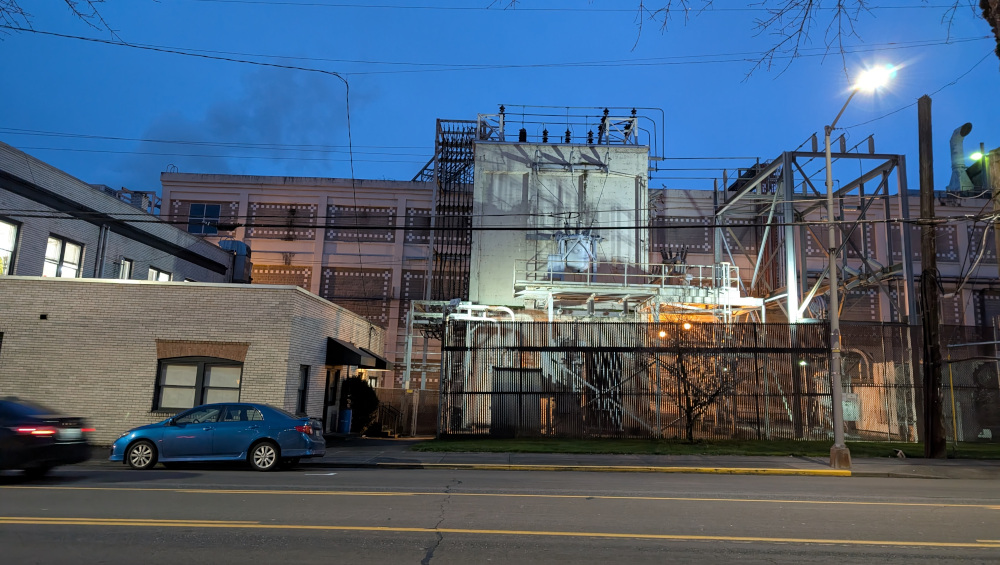
On November 14, 2017, Georgia-Pacific (owned by Koch Industries) announced devastating news: the mill would shut down its communication papers machine, fine paper converting assets, and all pulping operations. Up to 200-300 workers would be laid off, leaving only about 140-150 employees.
By 2018, the mill that once employed 2,800 people was down to roughly 150 workers.
For a city that had defined itself by papermaking for 135 years, this could have been catastrophic. But Camas had been preparing.
The Seeds of Transformation: 1960s-1990s
While the mill was still thriving, forward-thinking city leaders recognized they couldn't rely on one industry forever.
Operation 4-Sight: Reimagining Downtown (1964)
In 1964, downtown business owners proposed a revolutionary plan called "Operation 4-Sight"—the first downtown shopping park of its kind in the Pacific Northwest.
The vision included:
- Better parking layout
- Trees, flowers, benches, and gazebos
- Store awnings
- Buried electrical and phone wires
- Widened sidewalks
- Outdoor sound system
In 1965, they built a temporary mock-up of the improvements and left it in place for two months so residents could experience and suggest changes. It worked—downtown Camas began transforming from an industrial mill town into a charming, walkable community.
Attracting Tech Companies: 1980s-1990s
City leaders also worked to diversify the economic base by courting high-tech companies. The strategy paid off.
Sharp Microelectronics (mid-1980s)
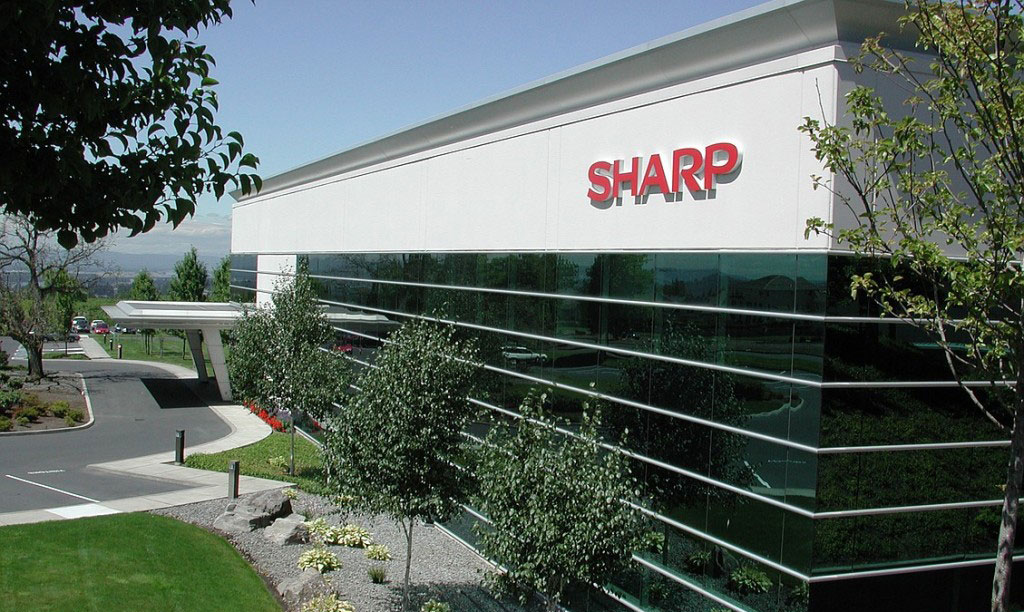
In 1985, a 118-acre campus was established for a joint venture between RCA and Sharp Microelectronics to build a 250,000-square-foot semiconductor fabrication lab. When the deal fell through after General Electric bought RCA, Sharp took over the site in the mid-1990s.
Sharp Laboratories of America was established in 1995 as an applied research and development facility, employing over 180 people by 2003. Sharp Microelectronics of the Americas, also based in Camas, became Sharp Corporation's North American design center for microcontrollers and system-on-chip designs.
Though Sharp later consolidated and sold properties (including one to Camas School District for $12.5 million to become Odyssey Middle School), their presence established Camas as a legitimate tech destination.
WaferTech: The Game-Changer (1996)
The biggest win came in 1996 when Taiwan Semiconductor Manufacturing Company (TSMC) established WaferTech in Camas with an investment of over $1 billion—a massive amount at the time.
Production began in 1998 at 0.35-micron technology. By 2000, TSMC bought out all partners and investors, taking full control. WaferTech became TSMC's first U.S. pure-play foundry and TSMC Fab 11.
Today, WaferTech operates a 23-acre complex on 260 acres, with a 130,000-square-foot 200mm wafer fabrication plant. They deliver semiconductors supporting innovations in automotive, communications, computing, consumer, industrial, medical, and military/aerospace applications worldwide (Zippia - WaferTech).
Other Tech Arrivals
Additional tech companies followed:
- Linear Technology (later acquired by Analog Devices)
- Underwriters Laboratories (UL) - international safety science company
- Hewlett-Packard (HP)
- PLEXSYS Interface Products - modeling and simulation systems (founded 1986)
- Sigma Design - product design and engineering
- Furuno - navigation and electronics
- nLIGHT - fiber laser manufacturing
Camas Today: A Transformed Community
Economic Diversification
Camas operates on a $153 million budget and employs approximately 267 staff. The city's unemployment rate stands at 4.5%—better than many comparable communities.
The 2024 top employers in Camas include:
- Camas School District
- WaferTech (TSMC)
- Georgia-Pacific (paper mill - significantly reduced)
- Underwriters Laboratories
- Sharp Microelectronics
- City of Camas
- Various tech and healthcare companies
Notice what's changed: the paper mill is no longer the dominant employer. The school district and tech companies now lead the economic landscape.
Population Explosion
The numbers tell the transformation story:
- 1990: 6,798 people
- 2000: 12,534 people (84% increase)
- 2010: 19,355 people (54% increase)
- 2020: 26,065 people (35% increase)
Between 1990 and 2020, Camas's population nearly quadrupled. This wasn't just natural growth—it reflected people choosing Camas for its quality of life, schools, and access to tech jobs.
Schools: A Major Draw
One of Camas's biggest assets today is its exceptional school system. The transformation from mill-funded schools to a highly ranked district is remarkable.
Camas School District (as of 2024):
- 7,244 students in grades PK-12
- Ranked #7 out of 306 Washington state school districts (top 5%)
- #1 in Clark County
- 67% proficiency in math (vs. 41% state average)
- 77% proficiency in reading (vs. 53% state average)
- 91% graduation rate
- 53% AP exam participation rate
(PublicSchoolReview.com; Niche.com; SchoolDigger.com)
Camas High School is ranked:
- #1,585 nationally
- #26 in Washington state
Discovery High School (project-based learning) is ranked #39 in Washington).
These rankings attract families relocating to the area—particularly tech professionals with school-age children.
Changing Demographics
The demographic shift reflects the tech industry influx:
- 76.3% White (down from 92% in 2000)
- 9.9% Asian (up from 3.4% in 2000)
- 7.2% Hispanic/Latino
- Median household income: Significantly above Clark County average
- Homeownership rate: High, reflecting family-oriented community
The Asian population nearly tripled, largely due to tech industry recruitment—especially from TSMC/WaferTech, which brings engineers and specialists from Taiwan and across Asia.
Downtown Revitalization
Today's downtown Camas is charming, walkable, and thriving—a testament to the 1964 Operation 4-Sight vision.
Downtown features:
- First Friday events (5-8 PM, first Friday of every month)
- Independent shops, restaurants, and coffee houses
- Georgia-Pacific Mill Interpretive Center (401 NE Adams St.) - celebrating mill history
- Flower baskets, outdoor seating, pedestrian-friendly design
- Arts and culture events year-round
The mill hasn't been erased from memory—it's been honored and integrated into the city's identity while no longer defining it.
Parks and Recreation
The mill's legacy gift—those 200+ acres of donated parkland—now serves a city four times larger:
- Lacamas Lake Park and Round Lake (hiking, fishing, boating)
- The Camas Potholes (waterfall, swimming hole)
- Prune Hill Sports Park
- Fallen Leaf Lake Park
- Dozens of neighborhood parks
These green spaces are now among Camas's biggest quality-of-life draws.

What Drove the Transformation? Lessons Learned
Looking back, several factors enabled Camas to successfully pivot from mill town to tech hub:
1. Forward-Thinking Leadership
City leaders in the 1960s-1980s didn't wait for disaster. They diversified while the mill was still thriving, recognizing that relying on one industry was risky.
Former mayor Nan Henriksen's reflection on the 1970s strike captures this: "That was the real wake-up call. At any time, the mill could do another analysis and decide to close it".
2. Strategic Location
Camas's geography offered advantages:
- 20 miles east of Portland - access to major metro without big-city costs
- Columbia River access - historically important, still scenic
- Natural beauty - lakes, forests, Gorge proximity
- I-205 and SR-14 access - easy commutes
Tech companies valued proximity to Portland International Airport, Portland's tech ecosystem, and quality of life.
3. Investment in Infrastructure
The city invested in tech-ready infrastructure:
- High-speed internet and telecommunications
- Modern business parks
- Upgraded utilities and services
- Maintained excellent schools
These investments signaled Camas was serious about attracting 21st-century industries.
4. Community Resilience
Camas residents didn't just mourn the mill's decline—they embraced change. The strong work ethic, commitment to education, and community bonds that defined the mill era transferred to the new economy.
As the Downtown Camas Association notes: "As the paper mill took root here, so did a strong community with an unshakable belief in hard work, the value of education and the bond of shared purpose".
5. Preserved Identity
Rather than erasing mill history, Camas integrated it. The Mill Interpretive Center, historic downtown panels, and continued recognition of the mill's role preserve the past while embracing the future.
Challenges Remaining
The transformation isn't complete, and challenges persist:
Housing Affordability
As demand grew, so did home prices. Camas is now one of Clark County's most expensive cities:
- Camas median home sales price: ~$858,000 (October 2025 median sold price)
- Significantly higher than Vancouver or other Clark County cities
- Limited inventory drives competition
Many tech workers and young families struggle to afford Camas housing.
Traffic and Infrastructure
Population growth brought congestion:
- SR-14 bottlenecks during commute hours
- Limited public transit options
- Parking challenges downtown during events
The infrastructure built for 6,000 people now serves 26,000+.
Maintaining Small-Town Feel
As Camas grows, longtime residents worry about losing the tight-knit community character. Balancing growth with livability remains an ongoing tension.
Economic Vulnerability
While diversification helped, Camas still depends heavily on a few large employers. A downturn in semiconductors or tech could impact the city significantly—though not as devastatingly as losing the mill would have in the past.
What This Means for You
If you're considering moving to Camas, understanding this transformation helps you appreciate what you're buying into:
Pros of Camas Today:
✅ Top-rated schools - #7 in Washington, #1 in Clark County
✅ Tech job opportunities - WaferTech, UL, Sharp, and growing ecosystem
✅ Small-town charm with modern amenities
✅ Outdoor recreation - lakes, trails, Gorge access
✅ Strong community identity and pride
✅ Safe, family-friendly environment
✅ Walkable downtown - restaurants, shops, events
✅ 20 minutes to Portland - big city access, small town living
Cons to Consider:
❌ Expensive housing - median $650K-$750K
❌ Limited inventory - competitive market
❌ Growing pains - traffic, infrastructure challenges
❌ Commute considerations - if working in Portland or Vancouver
❌ Less diversity than larger cities - though improving
The Future: What's Next for Camas?
Looking ahead, Camas seems positioned for continued growth:
Short-term (2025-2030):
- Continued residential development
- Downtown commercial expansion
- Infrastructure improvements (city planning underway)
- Tech sector growth as semiconductor demand increases
Long-term (2030+):
- Potential population of 35,000-40,000
- Further diversification beyond tech
- Enhanced public transit and connectivity
- Balancing growth with livability
The big question: Can Camas maintain its charm and community identity while growing? The city that successfully transformed from mill town to tech hub will need to apply that same adaptability to manage its next chapter.
Final Thoughts
Camas's transformation from mill town to tech hub is one of Southwest Washington's most remarkable success stories. It's a testament to forward-thinking leadership, community resilience, and strategic economic development.
But it's also a reminder that no economic model lasts forever. The paper mill that seemed permanent for 135 years eventually faded. The tech industry driving Camas today will also evolve. The key is adaptability—the willingness to honor the past while building for the future.
For families considering Camas, you're not just buying a house—you're buying into a community that has proven it can reinvent itself. A community that values education, works hard, and looks ahead. A community that turned potential disaster into opportunity.
That's the Camas story. And honestly? It's a pretty great place to write your own next chapter.
Sign up for my monthly newsletter to receive expert advice, important local updates, and insider knowledge on the best ways to thrive in this unique region. Whether you're buying, selling, or simply curious about life in the Pacific Northwest, I've got you covered.
👉 Join my newsletter today and never miss a beat! Just enter your email below and get exclusive access to all things Southwest Washington. Let's stay connected!

REALTOR® · REAL Broker · Licensed in WA & OR
⭐ 5.0 Rating | 48 Google Reviews | 109 Homes Sold | $58.8M in Sales
Categories
Recent Posts









GET MORE INFORMATION

Cassandra Marks
Realtor, Licensed in OR & WA License ID: 201225764
Realtor, Licensed in OR & WA License ID: 201225764